Written by Joy Maguvo, Story Team Leader at Long Miles Burundi
A visit to Burundi with Long Miles Coffee isn’t just about seeing coffee, it’s about connecting deeply with the people, places, and processes that make each cup meaningful. Whether you’re staying for two days or five, your time here will take you on a journey from farm to forest to cup, filled with stories, learning, and inspiration.
Visit to Coffee Farmers and Their Farms
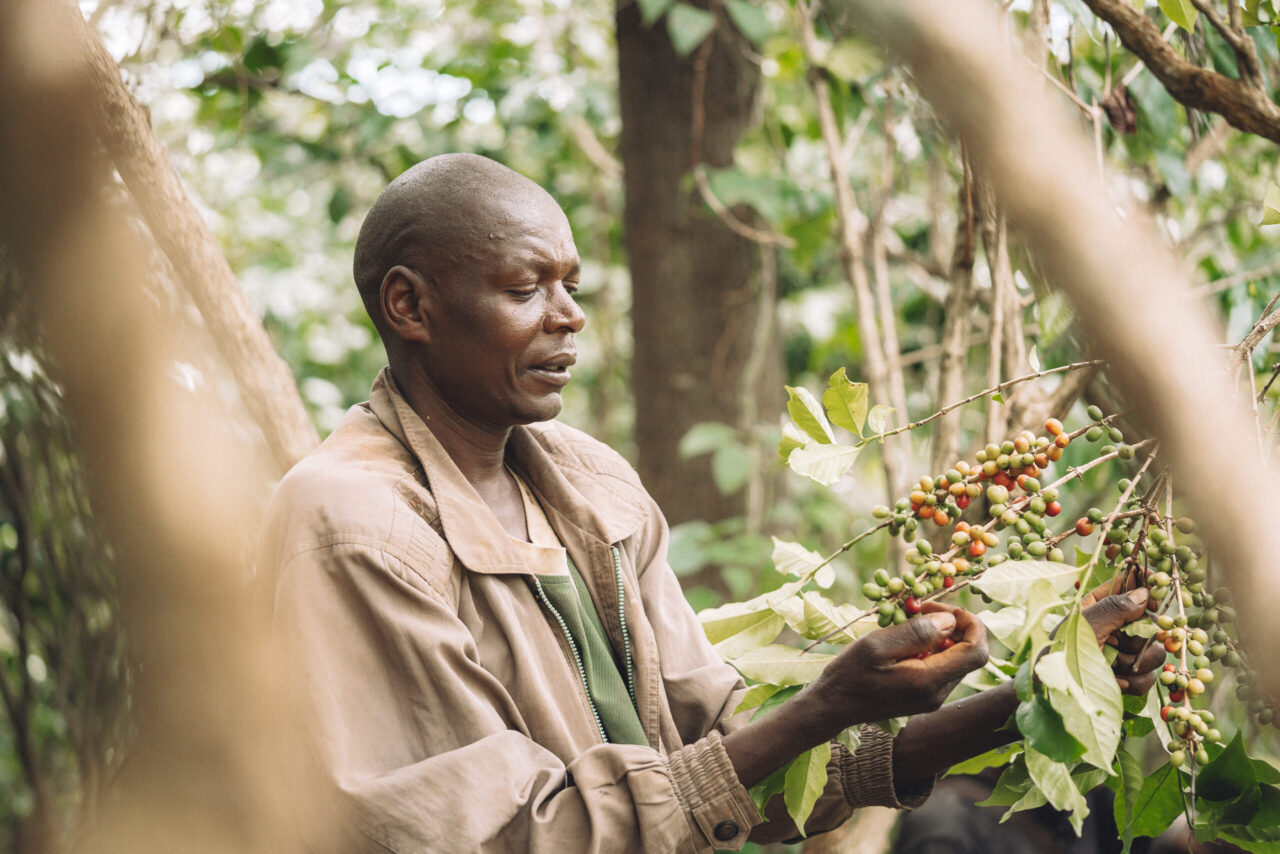
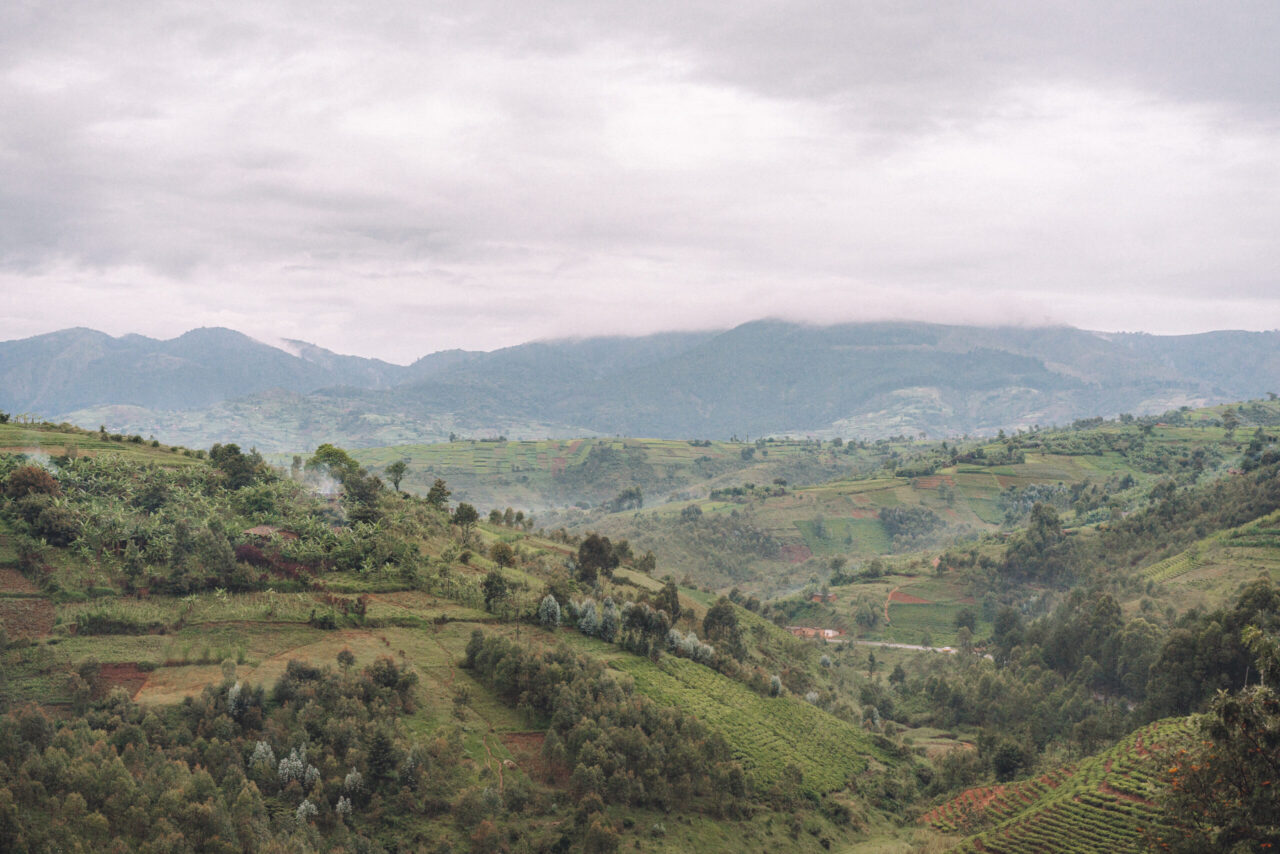
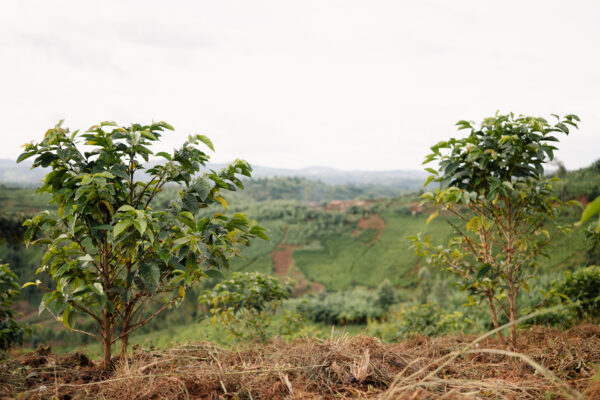
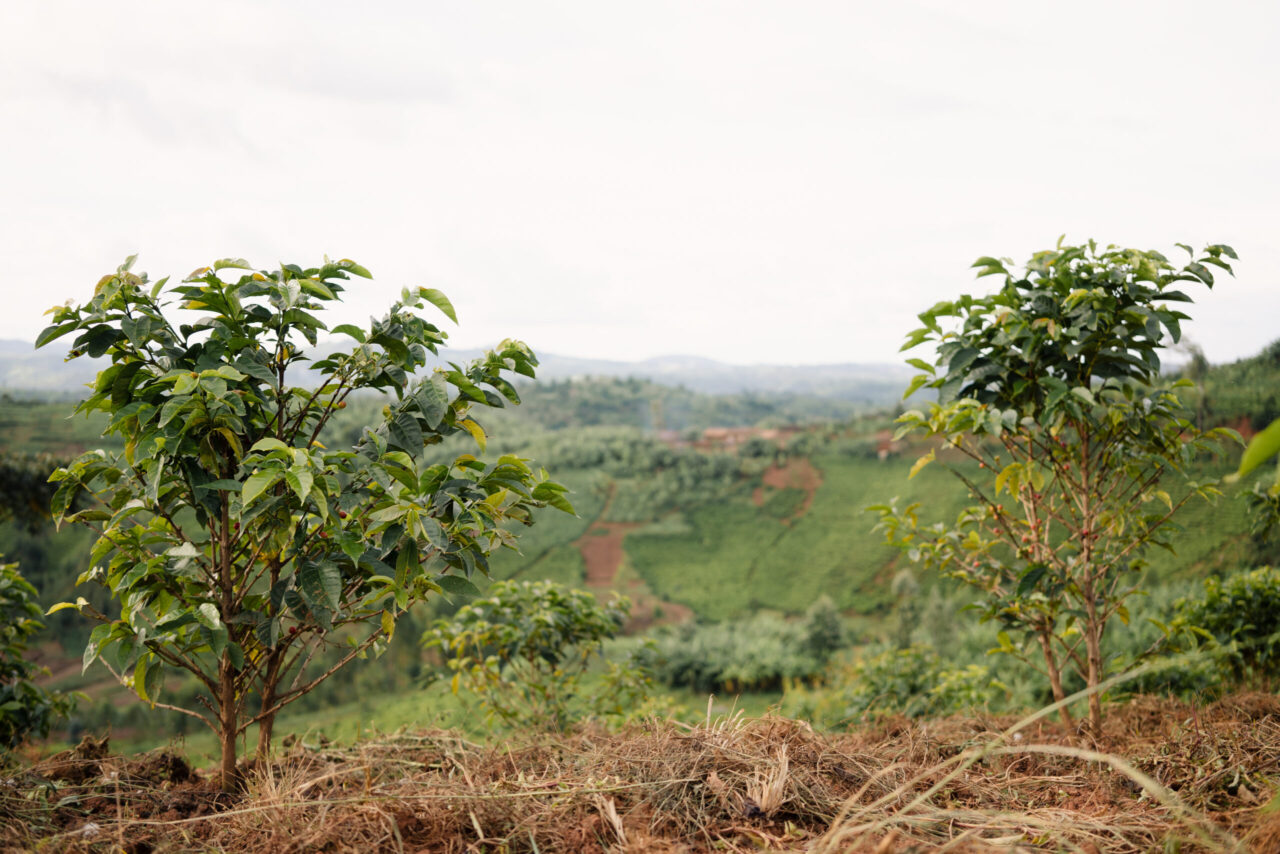
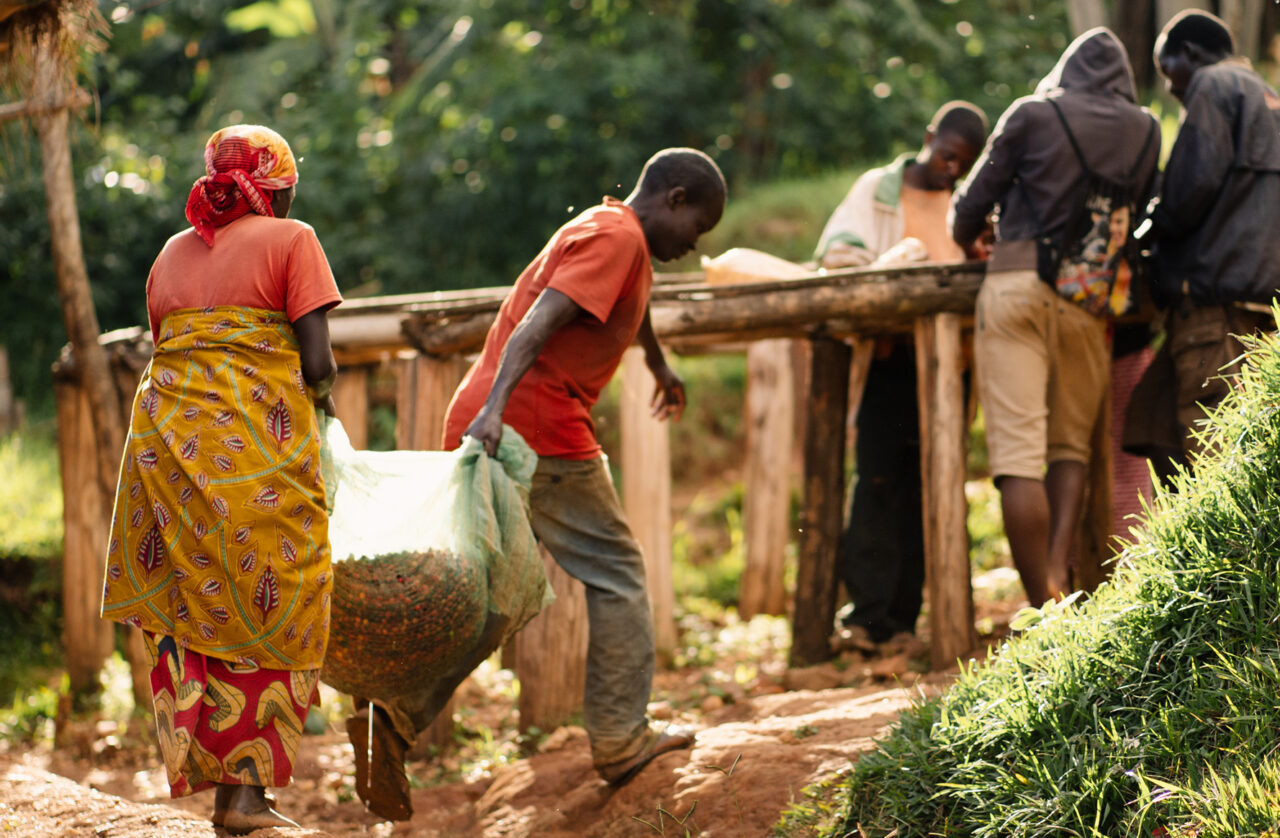
Your journey begins in the hills with the people at the heart of coffee: the farmers. You’ll walk through the coffee fields where cherries are grown, meet the growers and their families, and witness the dedication behind every harvest.
These visits offer a unique window into the daily life of farming families, the challenges they face, the pride they take in their work, and how your visit encourages and impacts them. It’s a moment of connection, from grower to consumer, and from story to reality.
This personal connection helps visitors understand the human side of coffee. Meeting the farmers puts names and faces to the work, showing the care and commitment that goes into every cherry picked.
Immersion at the Washing Stations
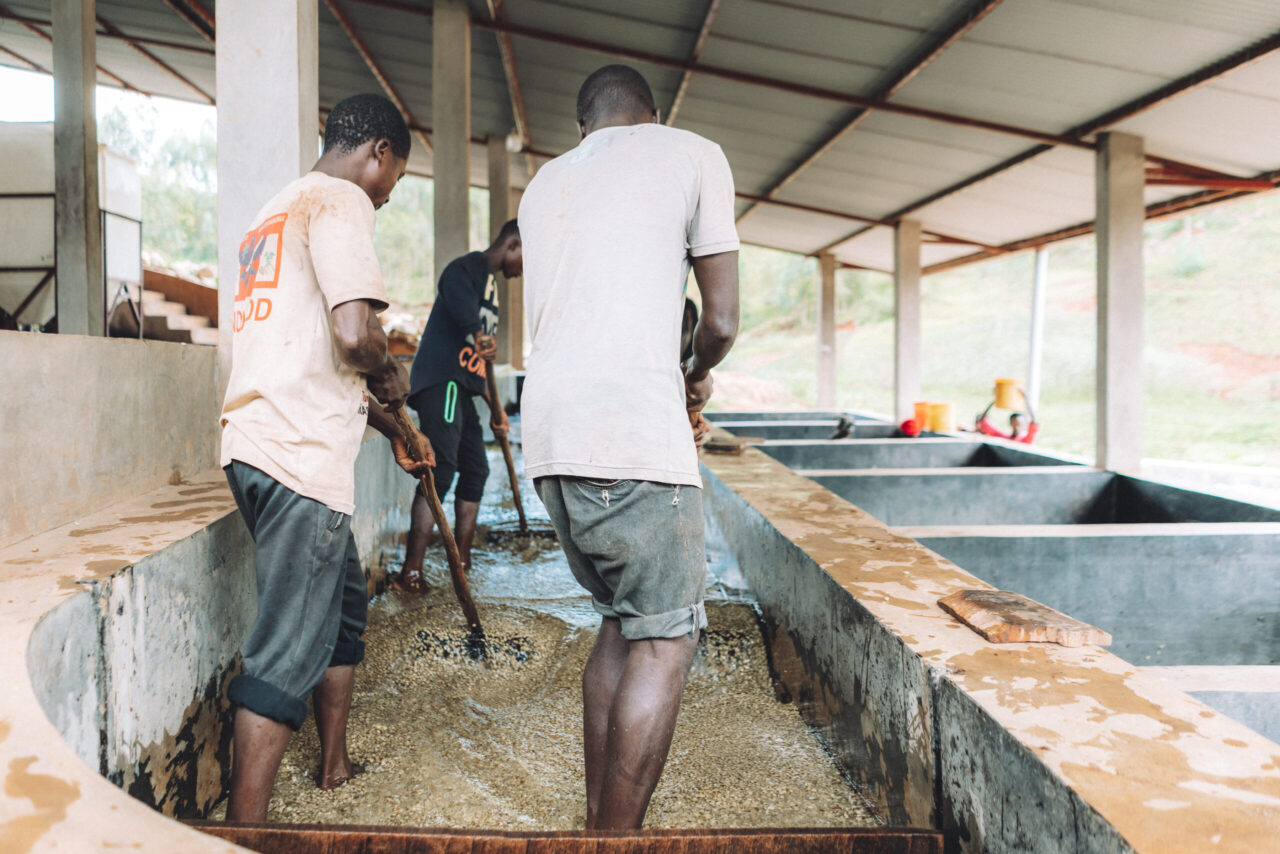
After visiting farms, you’ll spend time our three washing stations, Bukeye, Heza, and Ninga. These stations are where coffee cherries are carefully sorted, pulped, fermented, washed, and dried. Each step is intentional and plays a key role in developing the final flavor of the coffee.
Our dedicated teams will guide you through the process, and show you how quality is protected through each stage. You’ll see how important teamwork, timing, and precision are in creating great coffee. Understanding processing deepens your appreciation for quality, hard work, and the community effort behind each lot.
A Hike in Kibira National Park
Coffee doesn’t grow in isolation, it depends on a healthy environment. During your stay, you’ll hike through Kibira National Park, a lush rainforest bordering the coffee hills. This protected forest plays a crucial role in supporting the region’s climate, providing rain, biodiversity, and fertile soil.
The hike is not just scenic, it’s educational and grounding. It connects the dots between environmental conservation and the future of coffee farming. Seeing the forest helps you understand why sustainable agriculture matters. Protecting the land means protecting the future of farmers, families, and the coffee we love.
Cupping the Harvest
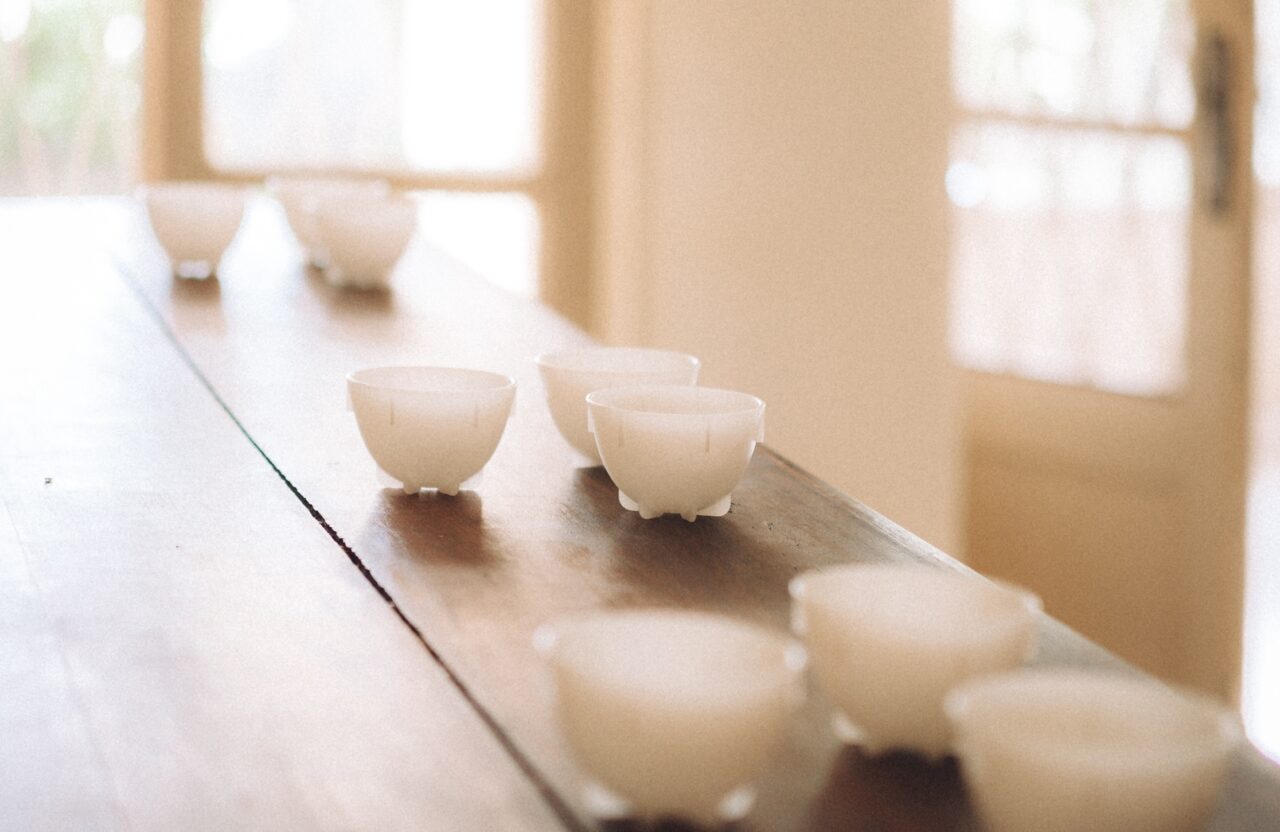
Your experience ends at the cupping table, where the journey comes full circle. You’ll taste coffees from different hills, possibly even from the very farms you visited. Through cupping, you’ll learn to identify flavor notes, explore profiles, and understand what makes Burundian coffee stand out.
This is the final and perhaps most powerful part of your visit: sipping the result of all the labor, love, and learning you’ve encountered. Cupping connects everything, from farmer to cup. It’s where visitors become part of the coffee’s story, not just as tasters, but as partners in its journey.
Written by Robyn-Leigh van Laren, Story Manager at Long Miles Coffee.
For decades, farming coffee has been considered as a “man’s job”. This is not just the case in Burundi, but the world over. According to the most recent data collected by the World Bank, women make up just over half of Burundi’s population. Some sources say that women make up more than half of the country’s agricultural labor force.
But, any number or statistic without context can be misleading. We could list the number of women that we work with, but what would that number mean in a greater context? It certainly wouldn’t be representative of the global coffee industry, let alone the coffee industry in Burundi. Women are without a doubt significant contributors to the coffee sector in Burundi, but are underrepresented in leadership, decision and policy-making roles
“In the rural parts of Burundi, women are working more than men. You can often see the men, but the women are hidden from view while managing many other tasks.” – Joy Mavugo
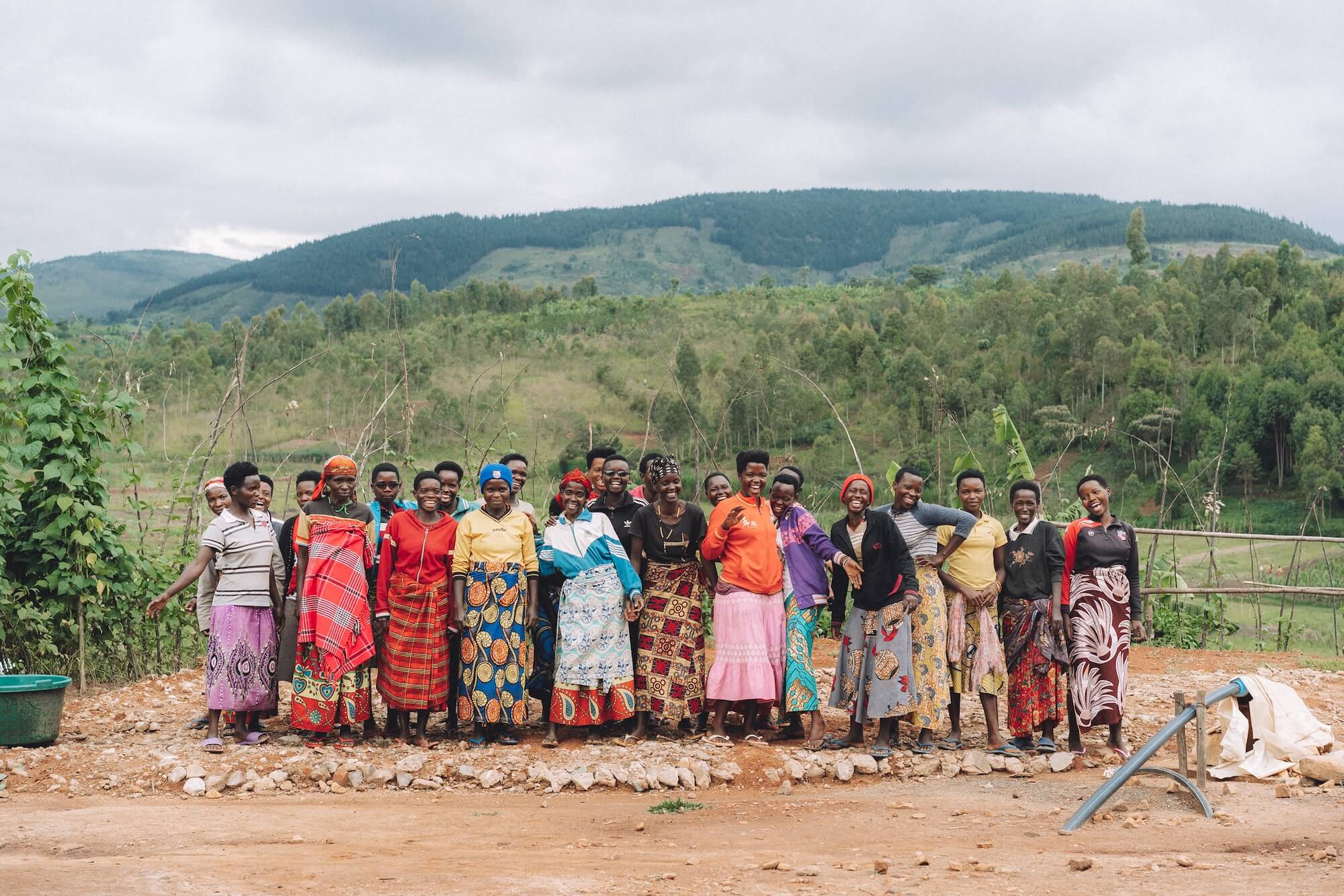
Women in Burundi work a multitude of jobs. One could go as far to say that they have a disproportionate number of roles and responsibilities. Generally, women who are producing coffee are also managing households, raising children, growing and harvesting subsistence crops to either cook or sell at the local market. Some of these women are also taking up seasonal jobs at the coffee washing stations adjacent to their homes where they typically hand-pick coffee to make ends meet- a key but labor-intensive role that has a profound impact on coffee quality.
Not all women in agriculture feel empowered to take up the jobs that men tend to do. Even if they do feel empowered, there is no guarantee that they will be compensated at the same rate as men for their labor. Many people believe that women in coffee should be paid less because their labor is generally less intensive than men.
“Where are the women?”
When we hold meetings with our partnering coffee farmers, more men tend to gather than women. Why is that? Women are often busy with other farm work or household tasks. I would often look around at these meetings and ask, “Where are the women?” People would look up and chuckle at me, the mzungu who can’t wrap her head around the complexities of gender roles in Burundi. From what I’ve come to understand is that women aren’t always intentionally excluded but their often unaccounted for labor will mostly be laughed off because that’s how it’s always been.
Why are we doing this? It was one of the first questions that I wrote down when thinking of running a series celebrating women in coffee. When I asked my colleague Joy Mavugo this question, her response was, “You know, if we were doing a series on men in coffee, we wouldn’t stop to think about this question.”
“If we were doing a series on men in coffee, we wouldn’t stop to think about this.”
Her words stuck with me for weeks. Ironically, I couldn’t stop thinking about it, which is why we’ll be sharing and celebrating the stories of incredible women working in coffee over the next couple of weeks.
This blog post was written by Joy Maguvo, Long Miles Coffee Story Assistant.
Dorothée Sibomana is a coffee farmer from Gaharo Hill. In most countries, it’s more common to see men involved in coffee farming maintenance than women. However, Dorothée defies that norm!
While her husband works as a mechanic in Bujumbura, Dorothée manages and maintains ALL of their coffee, maize, potatoes, sweet potatoes, and bean crops. Together, they support the family. Dorothée’s husband manages expenses surrounding school items for their children and clothing for the family, and she manages the fees for school and all other household expenses.
Dorothée credits coffee farming as the main reason they are able to fully live their daily lives. “Our coffee plantations mean everything to us. It is because of those plantations I am able to provide for my family as well as send our daughter to college,” said Dorothée. Until recently, Dorothée and her family had two coffee plantations.
Due to the incredible harvest in 2022, she was able to purchase another plantation. She is very thankful for this new plantation, as many of her old trees were recently cut down due to a coffee tree pruning campaign to encourage regrowth. Along with this new coffee plantation and additional potato, bean, and maize crops, Dorothée is able to provide for her family.
Together, with her husband, they understand the importance of coffee farming and are continuously grateful for the opportunity it brings to their family and surrounding communities.
This blog post was written by Joy Maguvo, Long Miles Coffee Story Assistant.
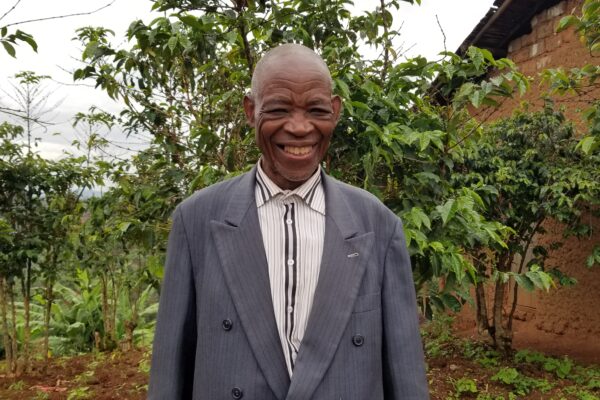
Apollinaire Nzobonimpa is a coffee farmer from Nkonge Hill in Burundi and is very involved in maintaining his coffee plantations.
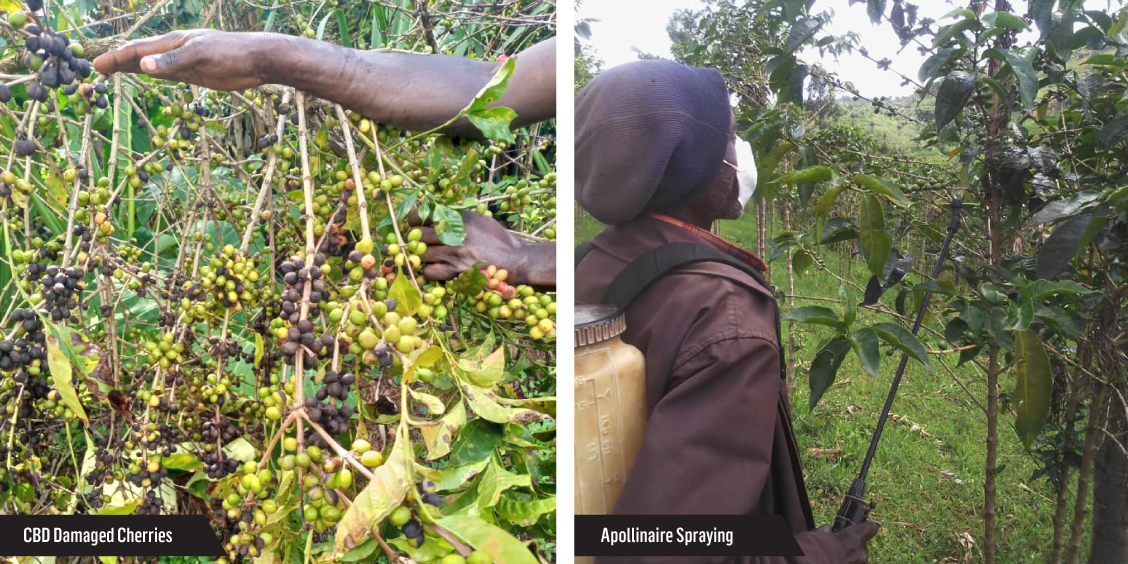
Along with the help of coffee scouts, he is able to manage pruning, mulching and applying fertilizer to his crops. However, there are some tasks, such as applying disease-eliminating coffee spray, that are out of his control and in the hands of the government. As many coffee farmers know, these coffee sprays can be a key to healthy-growing coffee trees. Without them, cherry growth can suffer.
Over time, many coffee farmers in Burundi have been struggling with Urukarakara, a coffee berry disease (CBD). The impact of CBD has been felt nationwide and it’s known that coffee spray could be the resolve many coffee farmers are looking for. Unfortunately, the requests for these cherry-saving chemicals are sometimes met with an unfavorable answer; “the chemicals to help eliminate CBD are very expensive – even the government is not able to get them right now.”
Even so, if the government receives the chemicals, the process to obtain them can still be quite long. Once in the hands of commune agronomists they are given to coffee monitors (i.e. government coffee scouts) who then manage distribution to coffee farmers. With so many coffee farmers in Burundi, the waiting game can prove itself to be costly.
This year, for Apollinaire and many other farmers, a miracle has truly happened! A nationwide coffee spray campaign has taken place to help better manage CBD and ward off the damage from insects.
Along with coffee spray, a powder-based chemical has become available. Not only is it the first time in Apollinaire’s coffee-growing career that he has seen anything like it, other farmers have been equally as amazed. “There is no way to explain the joy we have in receiving this CBD-fighting powder,” said Apollinaire. “We can’t wait to see the good changes!”
With each coffee farmer in Burundi receiving enough powder to spray all of their trees, there is much hope that the negative impact of CBD will be managed…or better yet…eradicated completely.
This blog post was written by Joy Maguvo, Long Miles Coffee Story Assistant.
Gervais Mpabonimana is a coffee farmer from Kabuye Hill. He is 69 years old and is the father of seven children.
After dropping out of Don Bosco School in 1968, he moved in with his parents. In 1974, after their failed attempts at encouraging him to go back, they gave him a plot of land for planting some coffee trees and ordered him to marry. Gervais was married in 1976. That same year, he planted 60 coffee trees on his plot of land. Most would believe this was the beginning of his coffee journey. However, Gervais had other callings he was interested in pursuing at that time.
He became very involved in Catholicism and was a teacher of children. Growing coffee was not his first priority. In 1978, he went to Centre de Formation à la Catéchisme et au Développement (CFCD) in Bujumbura to further train in Catechism and Catholic development. It was one year before the end of this three-year training program that Gervais’ coffee journey truly began.
While home during a summer holiday, a national survey was conducted to determine the number of coffee farmers and coffee trees owned. The survey consisted of a meeting held on Kabuye Hill where each coffee farmer stood up and informed the group of the number of trees they had. During that meeting, Gervais became ashamed to be the farmer who had the fewest coffee trees. Especially since coffee was considered to be one of the crops that brought the most development to the country. From then on, he was determined to make coffee growing a bigger priority for the betterment of his family and country. After three years of farming-focused training in Bujumbura, he began an internship in Belgium. During this internship, he earned a small amount of money he used to purchase more land for planting coffee trees. TODAY, he has 15 coffee plantations with 1,200 coffee trees located in Burundi.
Beyond being a coffee farmer, Gervais remains a dedicated Catechist and since 2003 has been teaching at the Institut Catéchétique Africain. This school used to be in Rwanda (Butare) but it moved to Burundi (Kayanza Province) in 2002. Here, he teaches four lessons. In addition, he teaches three lessons in Ngozi Province at École Reine des Apôtres (Queen of the Apostles School).
While coffee farming continues to be an important part of his life, Gervais also considers it to be a catalyst in helping him serve God freely with less stress. It is because of coffee farming he is able to spend six days a week teaching. His time is split between Kayanza and Ngozi. He has no monthly salary and through his teachings, he only receives what he calls a ‘fanta’ (very little money). This is a unique situation. In the area where Gervais lives, men are typically in charge of securing income for their family and women provide food. However, for Gervais, coffee growing covers everything. “While I consider being a Catechist one of my callings, I also need to make sure my coffee plantations are well-maintained. Those plantations are why my family is standing,” said Gervais.
With such a busy teaching schedule, Gervais is thankful for the Long Miles Coffee Scouts. They play a big role in helping maintain his coffee plantations. “Before, I used to have at least three hours a week of visiting my plantations which wasn’t easy due to my teaching and travel schedule,” said Gervais. “Now, I feel safe in knowing the Coffee Scouts are doing a great job. My worries are less as they are informing me on what is needed at the plantations and I am able to be more efficient with my work.”
Gervais was planning to be retired soon. However, thanks to the Long Miles Coffee Scouts, the only plan he has for retirement is to continue to focus on his coffee farms and add more in the future.
This post was written by Epaphras Ndikumana, Social and Environment Impact Manager for Long Miles Coffee
Every year after the coffee harvest season, generally from June up to the end of August in Burundi, many coffee farmers turn their focus to pruning and mulching activities. This is largely done because they are taken to be the basic and good practices in coffee farming. In some regions of the country, these activities go neglected because of the farmers’ ignorance or inability to perform the tasks as too demanding in terms of technical, material, knowledge, and/or financial resources. Nevertheless, the farmers working with Long Miles carry them out seriously, motivated by the help of the Coffee Scouts, because they are materially and technically supported by Long Miles and have also understood and seen for themselves the power of mulching and pruning in enhancing the productivity and the quality of the coffee they produce.
This season, the support provided by Long Miles allowed the pruning of more than 37,000 coffee trees in August and the work kept going until the middle of September. Working together with farmers on these activities puts into action two of Long Miles’ core values: Ubuntu and Grit, as we all fight for coffee quality improvement and success.
Mulching
This is a critical practice in coffee farms as it provides core nutrients to a coffee tree which are nitrogen, phosphorus, potassium, magnesium, and calcium. It is also positive in a number of other regards :
Protection against soil erosion,
Regulation of the soil temperature and maintaining soil humidity,
Improvement of the soil’s pH and cation exchange capacity,
Reduction of threatening vegetatives (i.e. weeds),
Improvement of the soil’s biological life,
Prevention of rainfall and soil compaction
Pruning
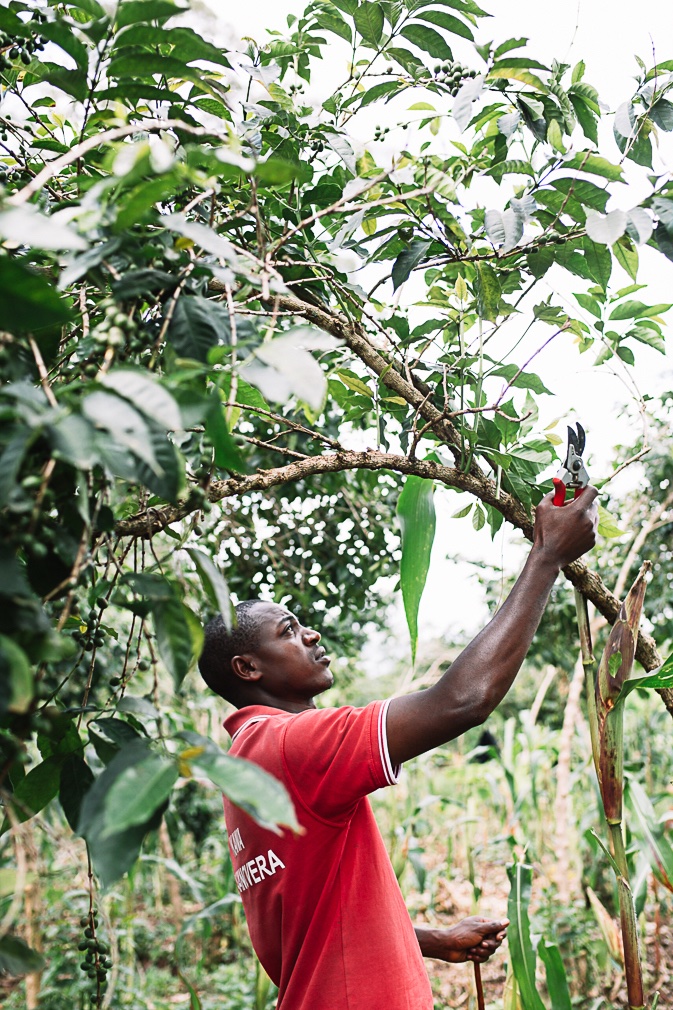
In addition to mulching, the pruning practice is also known for its big contribution to increasing coffee production and quality. In fact, through the implementation of specific types of pruning, the practice is known to contribute to increasing productivity by up to 30% compared to when it is not implemented.
In Burundi, as well as in the LMCP zones of operation, four styles of pruning are implemented :
Maintenance: This practice consists in removing the suckers growing on the stump, stems, or branches. It is implemented throughout the year, whenever the suckers appear. This is because suckers that are left to grow, especially if there are many of them, weaken the tree and this loses its energy to produce many cherries.
Production: Implemented once a year, after the harvest season, production pruning consists of:
Removing all the dead, too bushy, and very long branches,
Removing all the sterile, malformed, and broken branches, and
Removing the excessively branched branches
Regeneration: This practice consists in removing all the unproductive aged trees. It is implemented every 6 to 8 years when productivity highly decreases. It can also be implemented on abandoned or parasitized trees.
Growth: This is practiced in a newly planted coffee farm that is only one year old. It consists in bending down the principal tree stem from which will be grown three or more stems that will provide production. In Burundi, only three stems are only recommended.
In our most recent blog post we presented a brief overview of the Dry Milling process; the final processing step before coffee is placed into bags, ready for export. In that post, we mentioned Hand Sorting as a critical and final stage in the Milling process. Whereas that last post was focused on the bullet point steps of the Dry Milling process, our aim in this post will be to focus more on the humanity behind the final Hand Sorting step.
These are, after all, human hands that are performing the Hand Sorting. We often think of the supply chain beginning with farmers, ending with consumers, and containing a few other agents in between (exporter, importer, roaster). While this is not inaccurate per se, it is also not nearly complete. The supply chain also contains coffee pickers, washing station staff, warehouse staff, truck drivers, ship operators, forklift operators, and -of course- hand sorters (to mention only a few). In fact, while the plight of coffee farmers is sincere and deserves our utmost attention, it could be argued that it is these less-visible individuals in the supply chain that are most in need of advocates. A farmer could, after all, get paid very well for their coffee, making for a great transparency report on the consumer side; meanwhile, the individuals that picked that coffee could have received an abysmal wage and terrible working conditions. Sadly, we can share that these things do happen around the coffee-producing world. Burundi, along with many other East African nations, is somewhat insulated from this by the very fact that the farmers growing the coffee are frequently also the individuals picking the cherries. That said, Burundi is not immune from inequities within the supply chain – far from it.
Before getting much further, we should address some basic facts surrounding Hand Sorting.
Firstly, why is it done? It does seem that the many, many stages the coffee passes through at the Dry Mill would be sufficient to clean the coffee. Between sorting by size, density, and finally optical color sorter, you would think the coffee could come out of the milling process amazingly clean. And it does – relatively speaking. When compared to the product that goes into the mill, the finished product is remarkably clean. That said, the standards surrounding physical defects in green coffee have gotten extremely strict for specialty buyers. Overall, this is a good thing. It leads to better-tasting coffee that is easier to roast evenly, and that stays tasting good for a long period of time. If Specialty Coffee is ever to succeed in its purported goals, these are really important qualities for the coffee to possess. As such, hand sorting is critical for getting the coffee as clean as possible.
In truth, the optical sorter could be used to greater effect, to the point of eliminating most of the need for hand sorters. The optical sorter has a programmable sensitivity. When a seed passes in front of the laser that is outside of the programmed range (either too light or too dark in color) a puff of air shoots the unwanted seed into a reject pile. The challenge is, if the optical sorter is set to such a sensitivity that everything coming out is directly ready for export, it will very likely have also taken out a lot of extra, good-quality coffee. Furthermore, when the puff of air dispenses with the unwanted seed, it is not so selective that it only removes one seed. The coffee is moving very fast in front of the laser and each puff of air removes quite a few seeds.
Secondly, who employs the hand sorters? The hand sorters are not Long Miles employees. They are employed by the Dry Mill, which we do not in any way own. While we are allowed to have staff there to direct and oversee the hand sorters, we do not set or pay their wages nor do we ultimately decide who gets work and who does not.
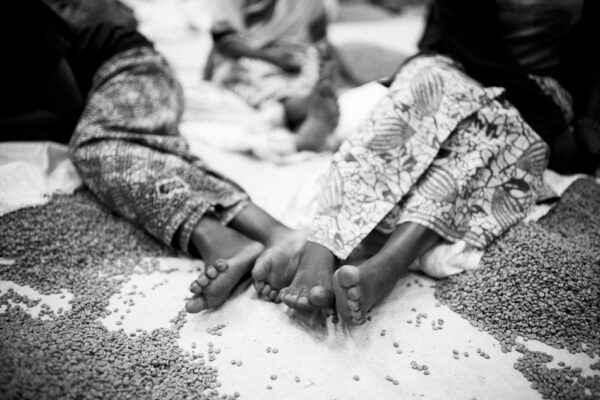
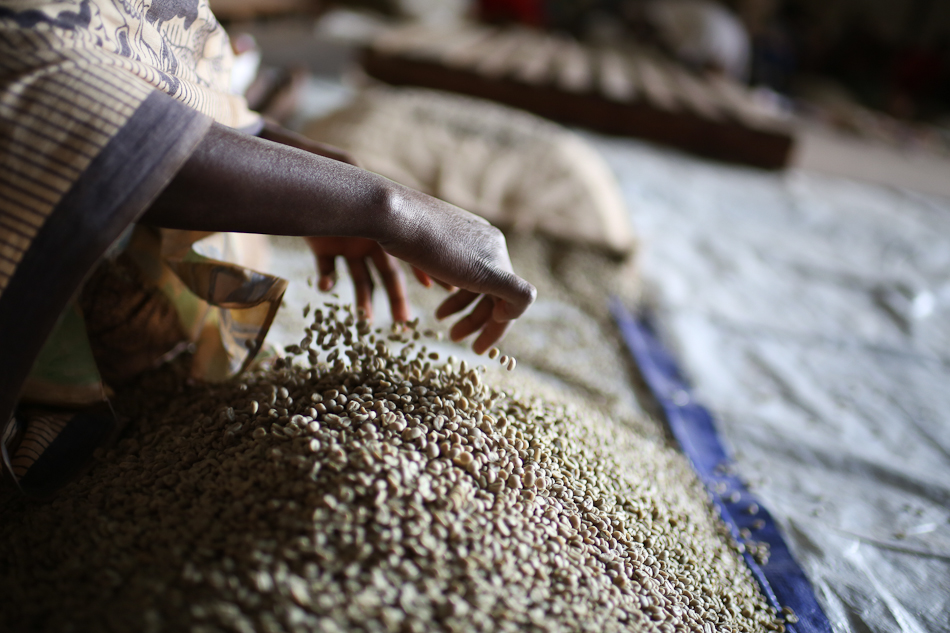
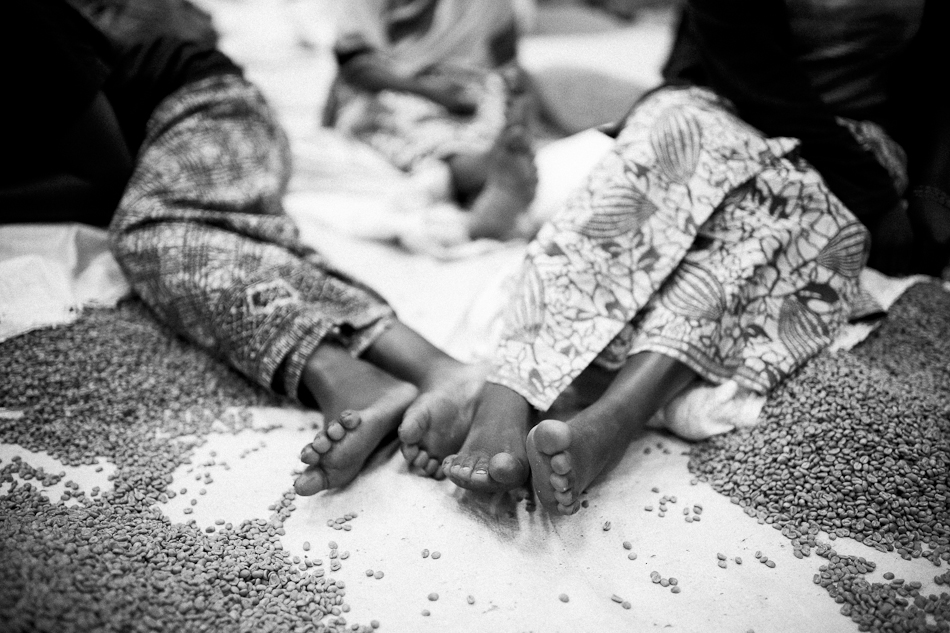
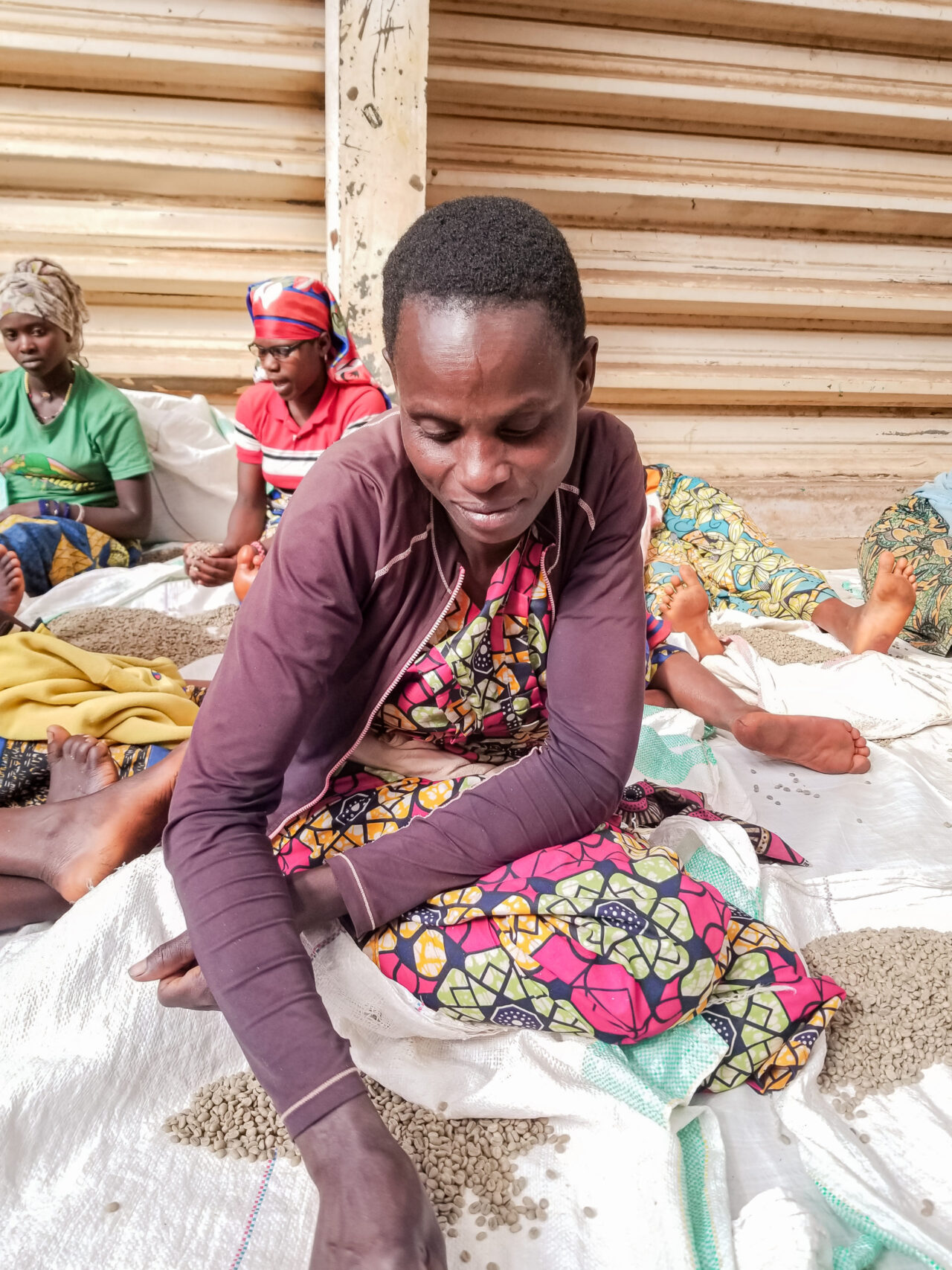
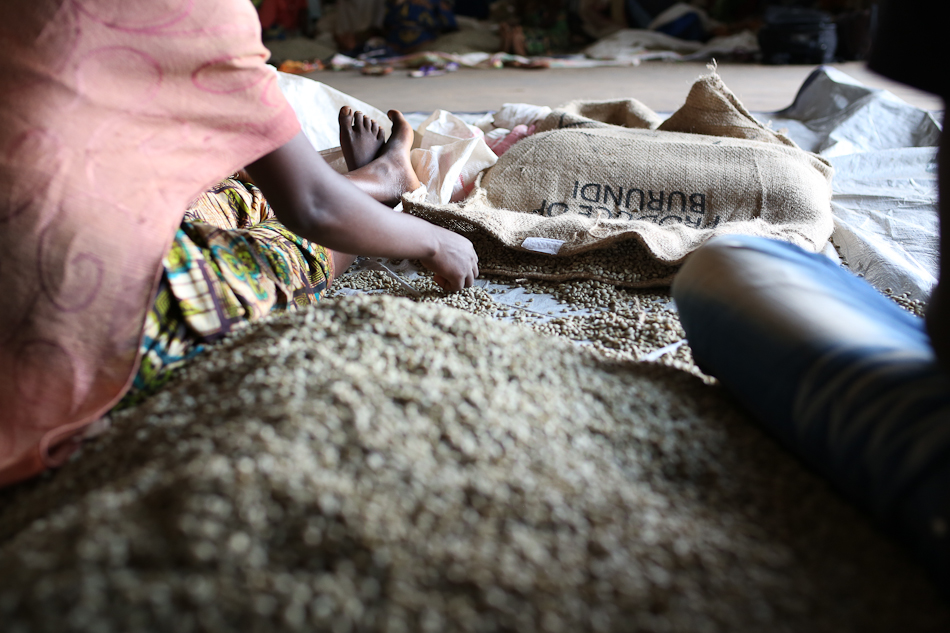
There are 335 people working as a part of the hand sorting team this year. 320 of them are women, 15 are men. All 320 women work in hand sorting. Three men work with them. Nine men work carrying bags and three men work supervising the hand sorters. Joy Mavugo, a Burundian and critical member of the Long Miles Burundi team says that there are more women doing this work because the other jobs available at the dry mill and elsewhere are too physically challenging. While there may be some truth to this, I will also share that, having spent a significant amount of time in many coffee-producing countries, it is no secret that women are the glue that binds within communities. Willing to take jobs that men find below them, women often support families through whatever means necessary. Hand sorting at Dry Mills seems to be one such job.
Recently, Joy spent time with the hand sorters as they worked; hearing their stories and asking them questions. Joy shared some background on two individuals in particular – Beatrice Nhimirimana and Melance Niyiragira.
Beatrice Nhimirimana is from Gitega, where the Dry Mill is located. She has been working as a hand sorter at the Dry Mill since 2019. Previously, her friends Alice and Yvonne were working as hand sorters and would ask if Beatrice was interested in joining them. She would always say no. Slowly, however, Beatrice noticed that he friends started to purchase livestock. They told her that the money came from their work as hand sorters. They said that they could use this money without asking permission from their husbands. Beatrice, who spends much of her year cultivating crops such as rice, beans, sweet potatoes, cassava, potatoes, and cabbage, never had spending money as the crops she grew were only for consumption, not for sale. Furthermore, at the beginning of the dry season, there is not much work for women because it is not time to harvest. As such, Beatrice decided to apply for work as a hand sorter and on her second attempt was given a job.
There are a number of things Beatrice likes about working in the Dry Mill. Firstly, she enjoys doing something apart from working in the fields. Secondly, she likes learning new skills. Thirdly, she enjoys spending time with so many people. Never before has she been with hundreds of people at a time. Finally, she enjoys earning her own money. Beatrice told us that, “after touching money, the thirst for it stays.”
The money Beatrice (pictured) has received from working at the dry mill has allowed her to support her family. Beyond this, the work is easier than her work cultivating crops in the field. In fact, this leads to the only issue in her eyes, “when the work at the mill is finished I go back to the fields and I need more energy. I lose it all sitting all day at the Dry Mill.”
The current pay for hand sorters is 2,000 Burundian Franc per day (at the time of writing this blog post that is just under $1 USD). Beatrice told us that they need more money as everything is getting more expensive. On the other hand, she prefers to make this money rather than stop working. Beatrice told us that she believes she will have many days of work as she has never seen sch a large harvest in her life.
We also spoke with Melance Niyiragira. Melance told us that, “hand picking is for women because it doesn’t require much energy.” He has been working at the mill since 2006. Back then he was carrying coffee bags. He did this work for many years, but the heavy bags (60kg each!) began to cause pains in his chest, pains that continue to this day. He needs this work to survive, but he was not shy in telling us that it makes him uncomfortable spending days sitting with women.
Gender seems to be a particularly complex topic in Burundian culture. In truth, it is a topic that I (David Stallings) struggle to feel confident/comfortable writing about. Not because the topic makes me uncomfortable – in any way. Rather, I am a white, cisgender male and acutely aware of the fact that it is exactly that demographic that has so disastrously and wrongfully dictated/written history. I do not want to shy away from the statements above that delineate gender roles even though I know they can be uncomfortable to read, nor do I want to express them in a way that makes it seem that I/Long Miles share these perspectives. In talking about this with Joy Mavugo, she tells me that it is as much a class issue as it is a gender issue. That educated Burundian women “know the truth, they know how to fight for their rights,” and that for them, “there is no limit – they are in all industries, in the government, they are leaders.” For those women who are not educated, however, Joy says that “they are excluded from many things as they live in the culture of an older generation that believes the family wealth belongs to the men.”
It would be wonderful to have Joy write a post on this topic. She is an amazingly insightful and intelligent individual who has a great perspective on life in Burundi. If this is something you would be interested in reading, or if you have any thoughts on/questions about this post, please email info@longmilescoffee.com or comment below!
As the coffee cherry coming into our Burundi washing stations slows to a veritable trickle, we enter into the less talked about, less photographed, and less glamorous portion of the season: Dry Milling. Dry Milling is the final stage the coffee passes through before it is packed into bags, ready for loading into a container. While this portion of the season is seldom discussed in any public-facing manner, Dry Milling is actually an incredibly important step in producing top-quality coffee. We’ve paid homage to the importance of drying in previous blog posts (another seldom discussed, hugely important aspect of coffee processing), and we’ve discussed coffee processing in detail (including a deep dive into fermentation) in other posts, so it is fitting that we now take the time to show respect to this final processing step.
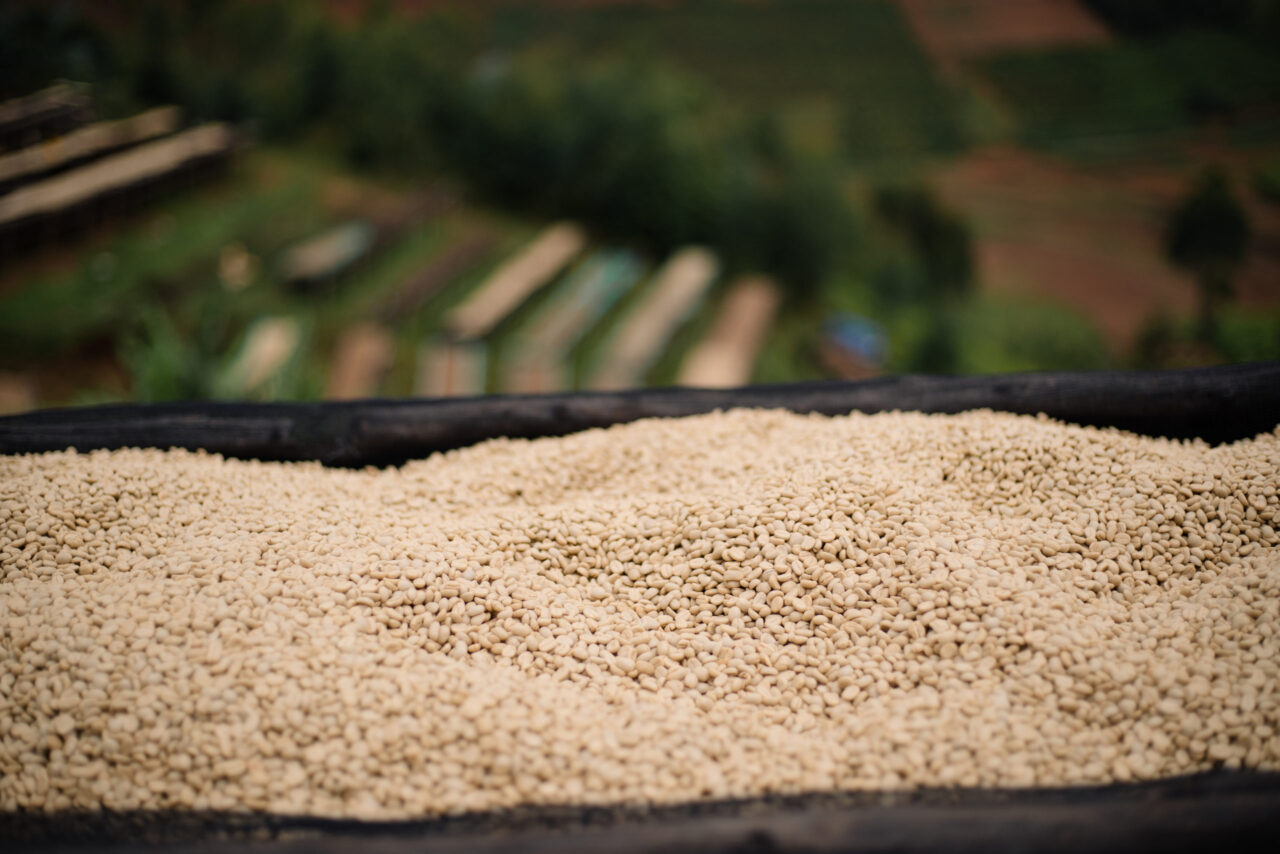
Parchment Coffee nearly ready to be removed from the drying tables.
It is only once the coffee is completely dried, placed in temporary bags, and stored in one of our warehouses (each washing station has one) that we are able to begin organizing a coffee’s Dry Milling program. Once a Day Lot of coffee is properly dried – and verified as such by water activity readings taken in our Bujumbura lab – we are able to decide if that Day Lot will be Dry Milled and exported on its own, or combined with other Day Lots from the same hill to form a micro-lot. As many Day Lots are too small to be milled and exported on their own, it is very common for combinations to take place.
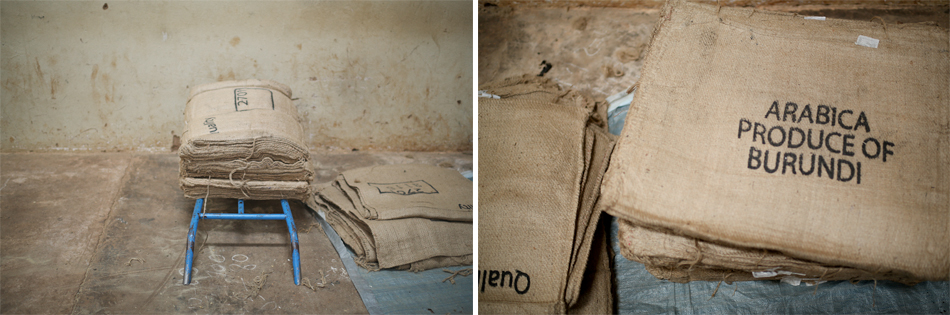
After it is known which other Day Lots a coffee will be blended with, or if it will be milled on its own, the coffee is trucked to the Dry Mill. Coffee accumulates at the Dry Mill until a critical mass is reached and we are able to submit a milling program.
Removing the Parchment/Husk
The most fundamental process taking place at the Dry Mill is the removal of a coffee’s parchment layer. The parchment layer is a thick, protective husk that surrounds the seed. It is critical that the parchment remain intact throughout the drying process, as this helps to ensure a more even drying. That said, there is significantly more that takes place at the Dry Mill than the simple removal of this husk.
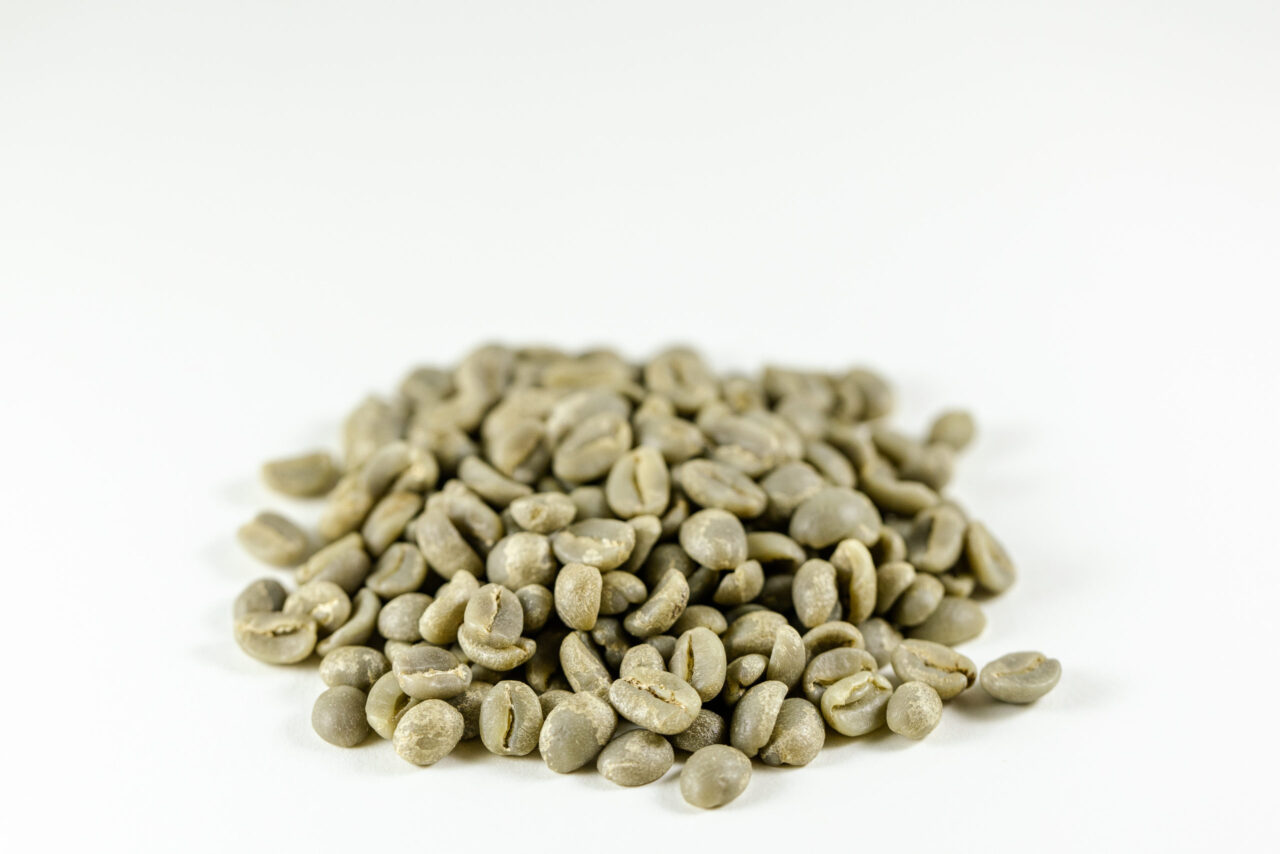
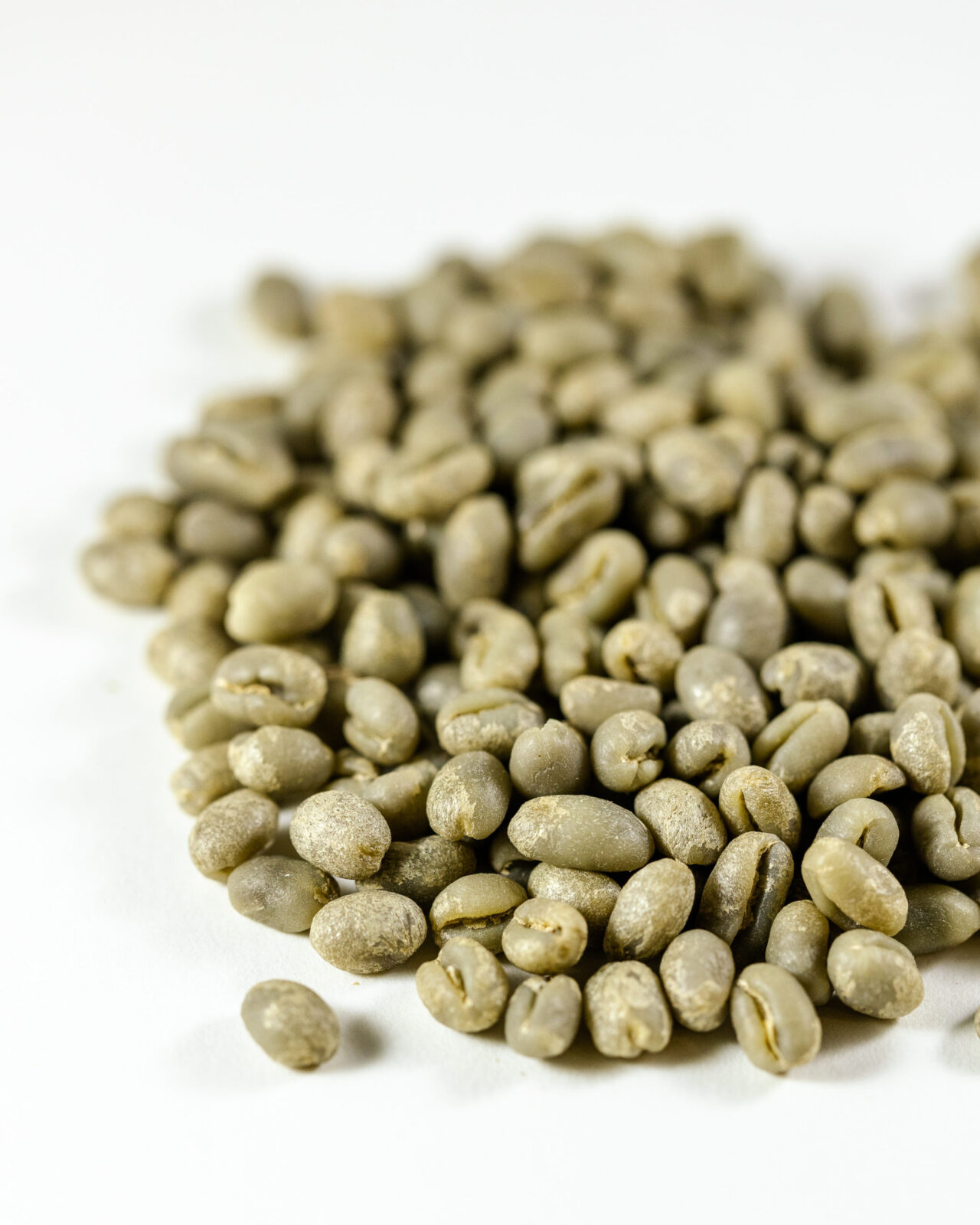
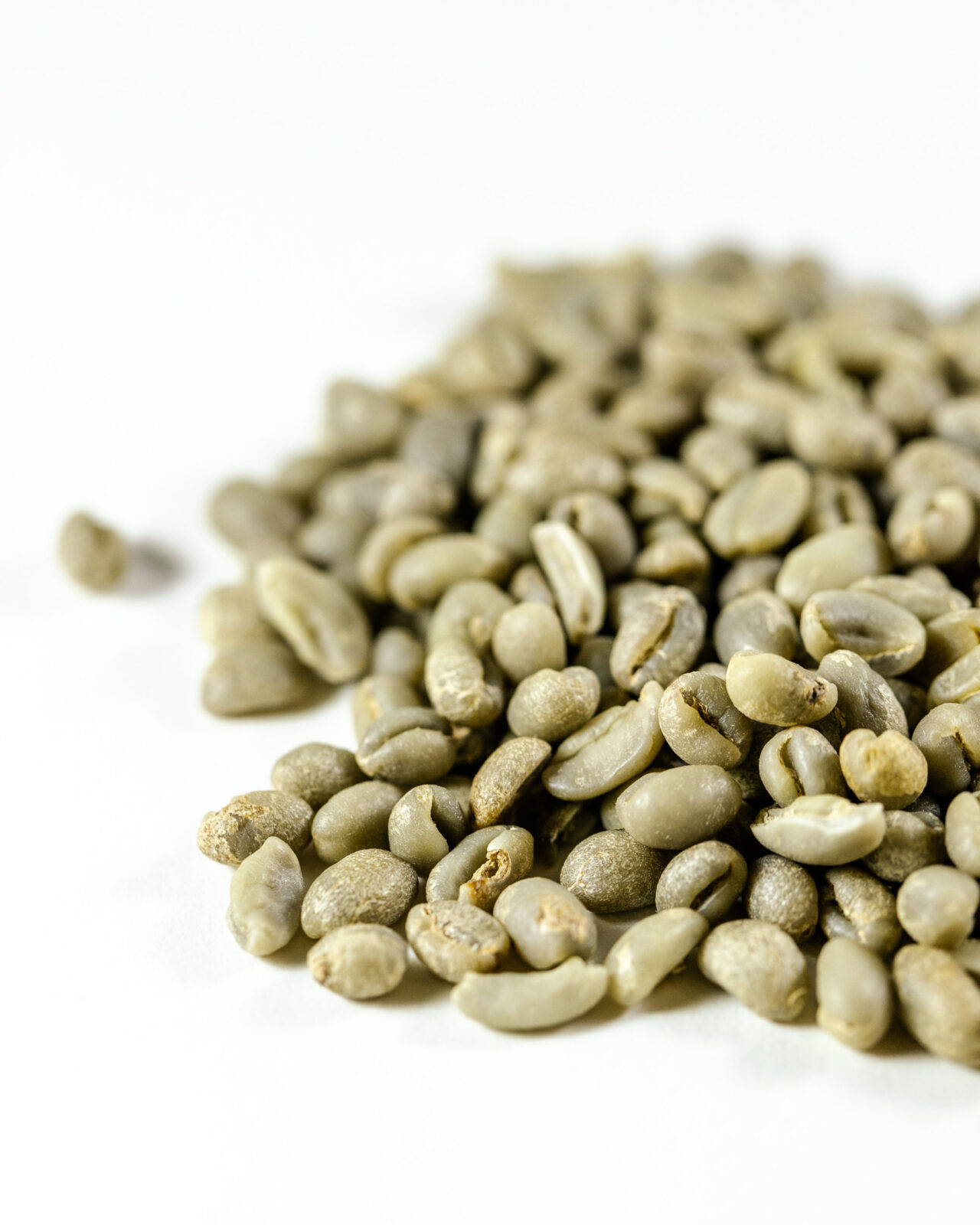
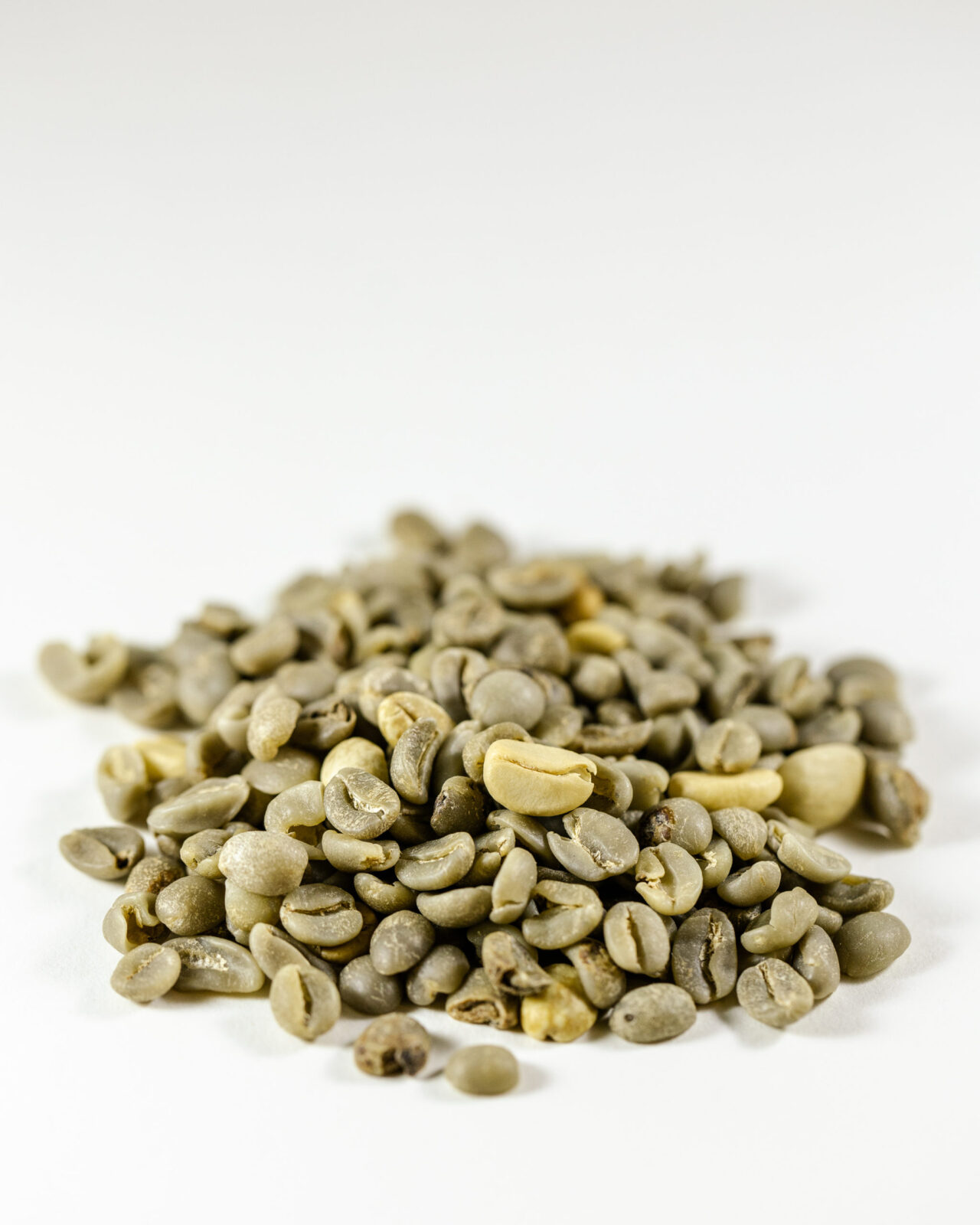
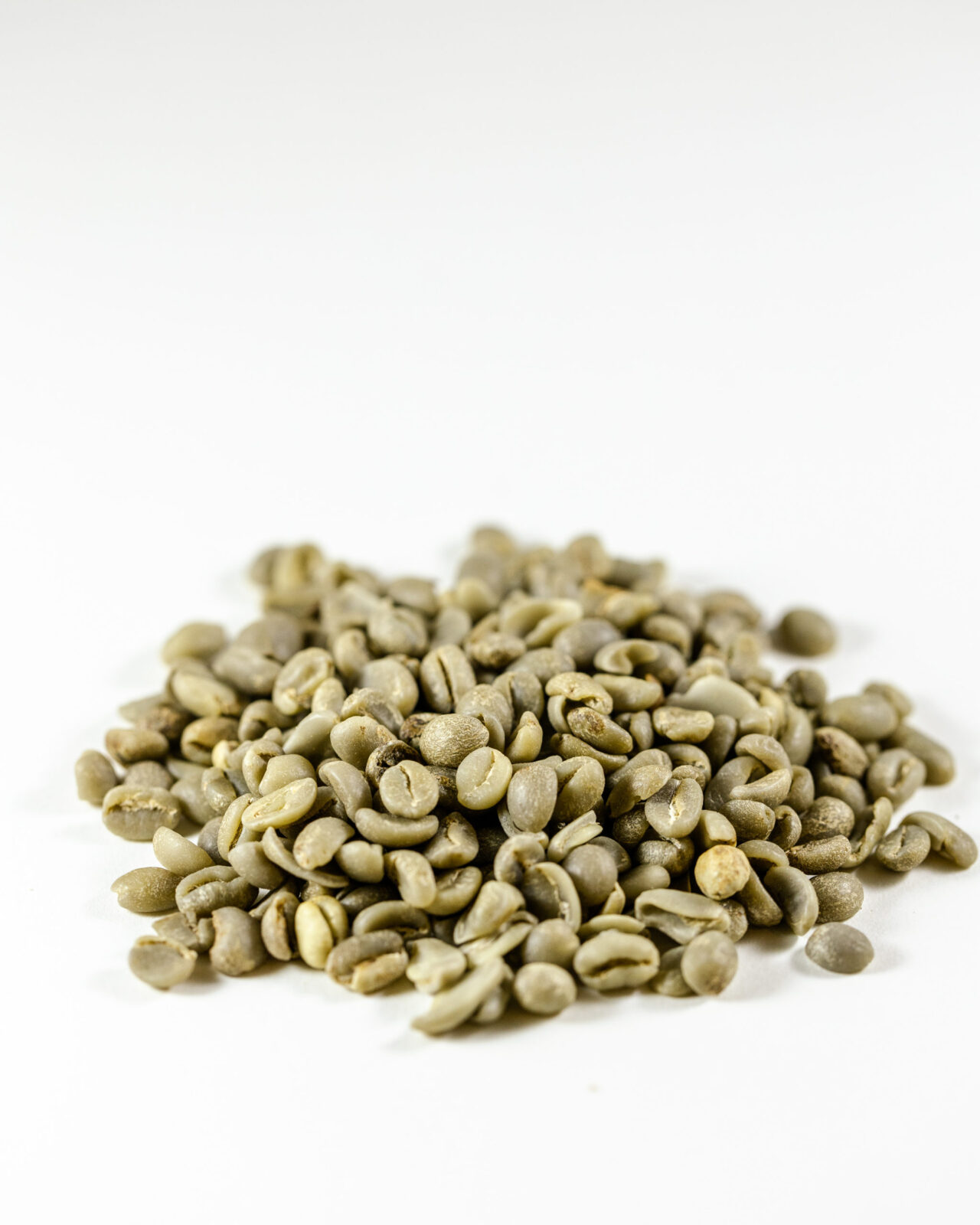
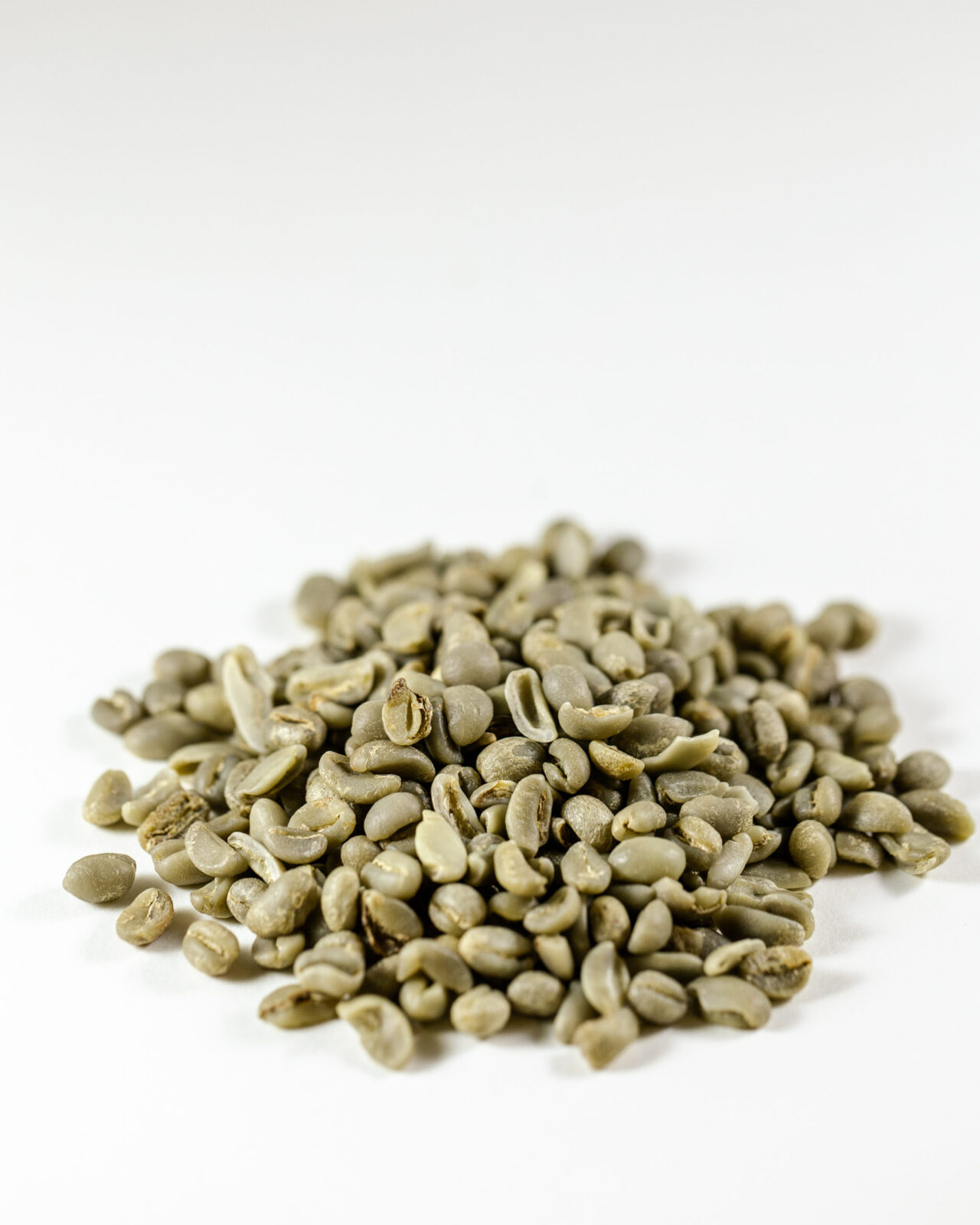
After the parchment has been peeled off the coffee, you are left with a relatively unclean product. The remaining steps in the Dry Milling process refine this to something that we recognize as clean, top-quality green (raw, unroasted) coffee.
Sorting by Size
Nearly all coffee-producing countries have standards relating to seed size and their top-quality coffees. In Burundi, all coffees that are exported as the highest quality are screen 15+. When talking about screen sizes, the numbers refer to 64ths of an inch. As such, in Burundi, top-quality lots must have a screen size of 15/64ths of an inch and above.
The exception to this is peaberry (aka PB) lots. Inside of a typical coffee cherry, one finds two seeds. Due to the way in which the seeds develop inside the round fruit, there is a flat side to each seed – this is where the two seeds meet inside the fruit. Peaberries are the result of coffee cherries in which one of the seeds aborted early in the development process. The result is one, often small, round seed. PB lots are sold as top quality but are often primarily comprised of seeds small than screen 15.
Clean, Screen 15+ prior to hand sorting.Screen 14Screen 12
Screen 14 and 12, pictured above, are bulked together and thoroughly hand sorted (see below) in order to produce the aforementioned PB lots.
Sorting by Density
Another step in quality separation is density sorting. This is done on an angled, vibrating table that shoots puffs of air up through the mass of coffee on the table’s surface (think: air-hockey table). This process forces the higher-density coffee to one side of the table and the lower-density coffee to the other. The higher-density coffee is of higher quality.
Density tables are also very effective at removing very dense objects such as screws and very light objects such as twigs – should either get this far in the process.
Finally, the coffee passes through an optical sorter. Optical sorters are incredibly impressive machines that use a laser to assess the color of each seed rapidly passing through its “line of sight.” The acceptable range of color is set by the operator and any seeds that are too dark or too pale are rejected by a puff of air forcing the seed into a reject pile.
Hand Sorting
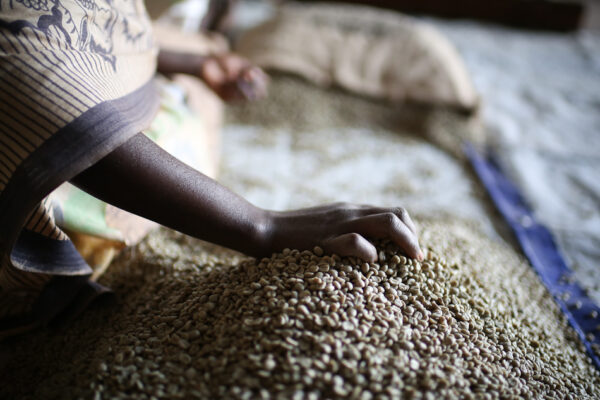
After the Dry Milling equipment is done processing the coffee, there is a final quality control step: hand sorting of the coffee. Teams of individuals (very commonly women in much of the coffee-producing world), sort through all of the coffee by hand, removing any defects that slipped through the mill line. The hand pickers are not looking for one specific type of defect, but rather anything that should not be included in the final product. It is very common for our micro-lots to be hand-picked at least twice before export, to ensure that only the highest quality coffee is exported.
In a future post, we will dig further into what happens to all of the coffee that is not sold as micro-lot quality. If you enjoyed this post or have specific questions we would love to hear from you. Please email us!
All coffee gets sold, including this brisure (French for “broken”), the lowest grade that comes out of the mill.
We have seen firsthand the devastation of climate change-induced weather events in the coffee regions of East Africa.
Burundi is ranked 171 out of 181 countries for risk of climate change. Sadly, we see that those living below the poverty line are the ones that are disproportionately more vulnerable to the risks of climate change because they are more exposed and susceptible to the elements. In Burundi, 64.9% of the population lives below the national income poverty line. {World Bank 2021}
For those that live directly off the land and face the elements on a daily basis, there is little reprieve. Their livelihoods and well-being are directly linked to the weather. The weather determines if their crops succeed or fail, and ultimately, whether or not their families are fed at the end of the season. For the coffee farmers of East Africa, climate change is not a far-removed future prospect, but a daily struggle. The reality of farming in and operating within their limited infrastructure is that farmers are left to the mercy of the weather and other climate events. This fragility is compounded by the limited access to irrigation and inputs.
For our team member Joy Mavugo, this line of being at the mercy of climate change is ever quavering. She has shared stories from communities across the hills of their dire situation after the torments of this rainy season.
Roger from Rugoma Hill says he has never seen rain like this. It has destroyed everything – the plantations, houses, and roads. It’s not just the coffee plantations – other crops are just as badly affected. After cultivating their season of beans and peas, each time an attempt is made to plant, seeds are washed away. His immediate fear is now hunger.
Other areas have been badly hit by unprecedented hail storms. For Zena from Camizi Hill, the cherries that have not been damaged by hail risk not ripening if the rain doesn’t stop. It is near impossible for them to plan for the coming months as the roads are bad and many bridges are washed away. Zena doesn’t know how they will deliver the cherries that they do have.
The storms that bring a mixture of heavy rain with wind are known as URUHUHEREZI and this is what farmers are most fearful of as coffee cherries drop rapidly and trees fall down – leaving even less hope for future seasons. As a leader and agronomist, Simon from Munyinya Hill says it is sad to see how farmers are losing hope. Simon feels powerless to help them against the effects of climate change.
We know that mitigating the effects of climate change is a mammoth task. We endeavor to sow the seeds for the future through our tree planting efforts which aim to protect and strengthen soil to minimize erosion, while also providing shade. This is vital as Burundi loses an estimated 34 metric tons of topsoil annually due to erosion*. For updates on our tree planting initiatives or on how the coffee harvest is progressing, sign up to our newsletter or visit https://www.longmilescoffeeproject.com/.