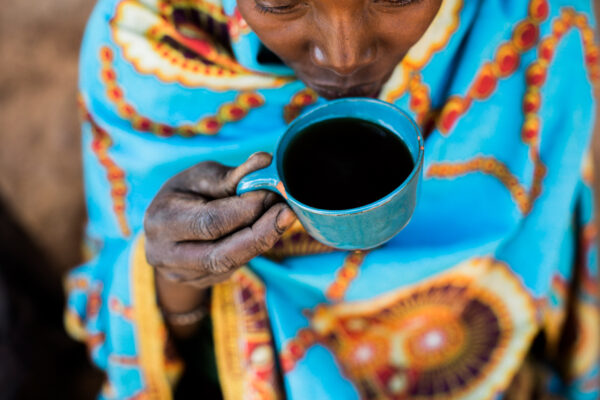
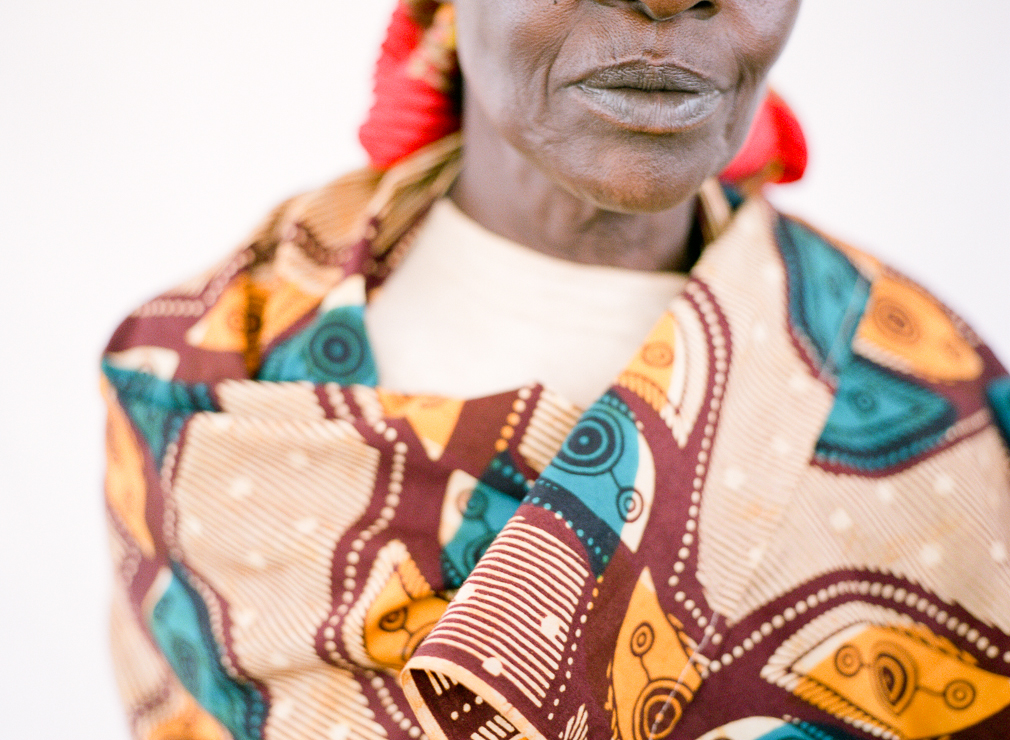
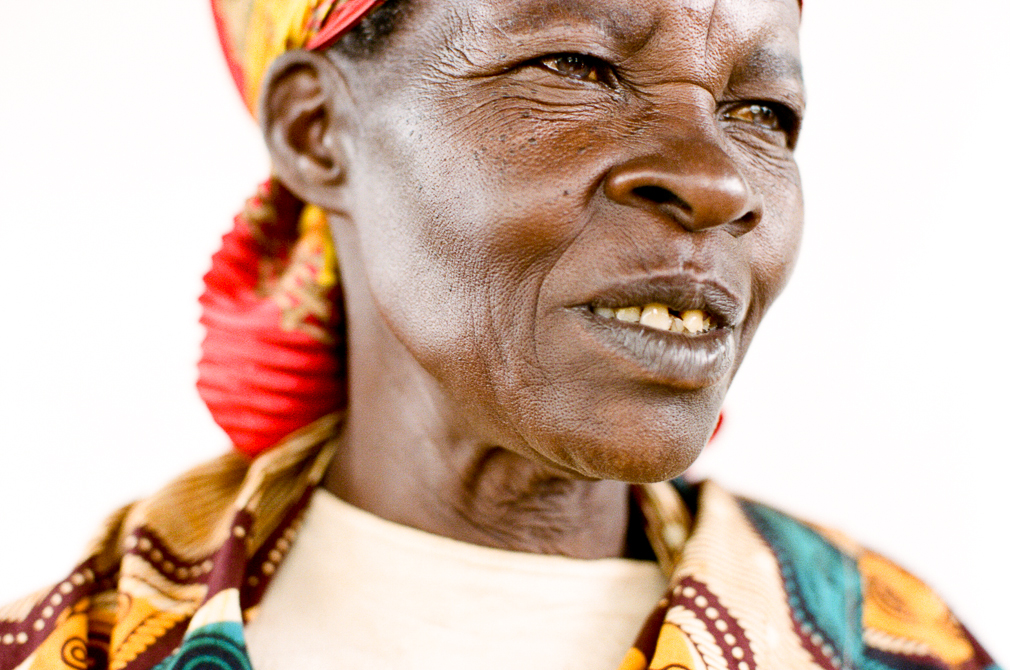
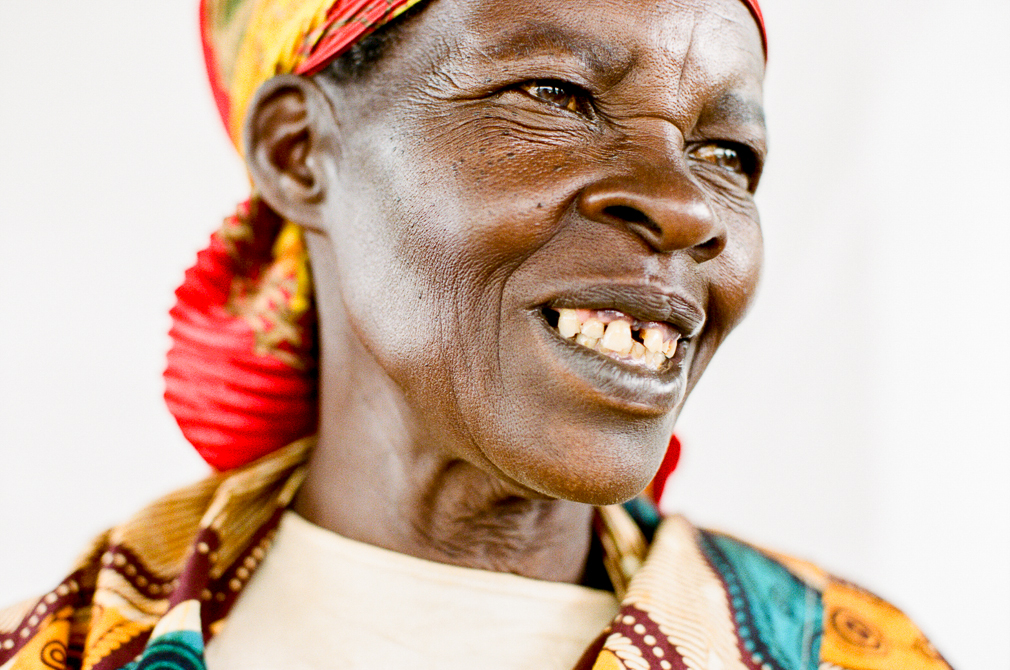
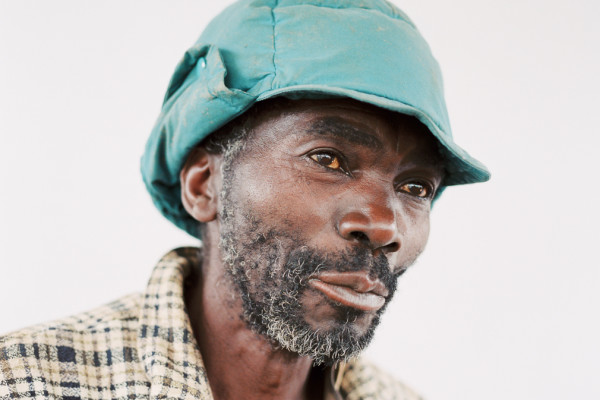
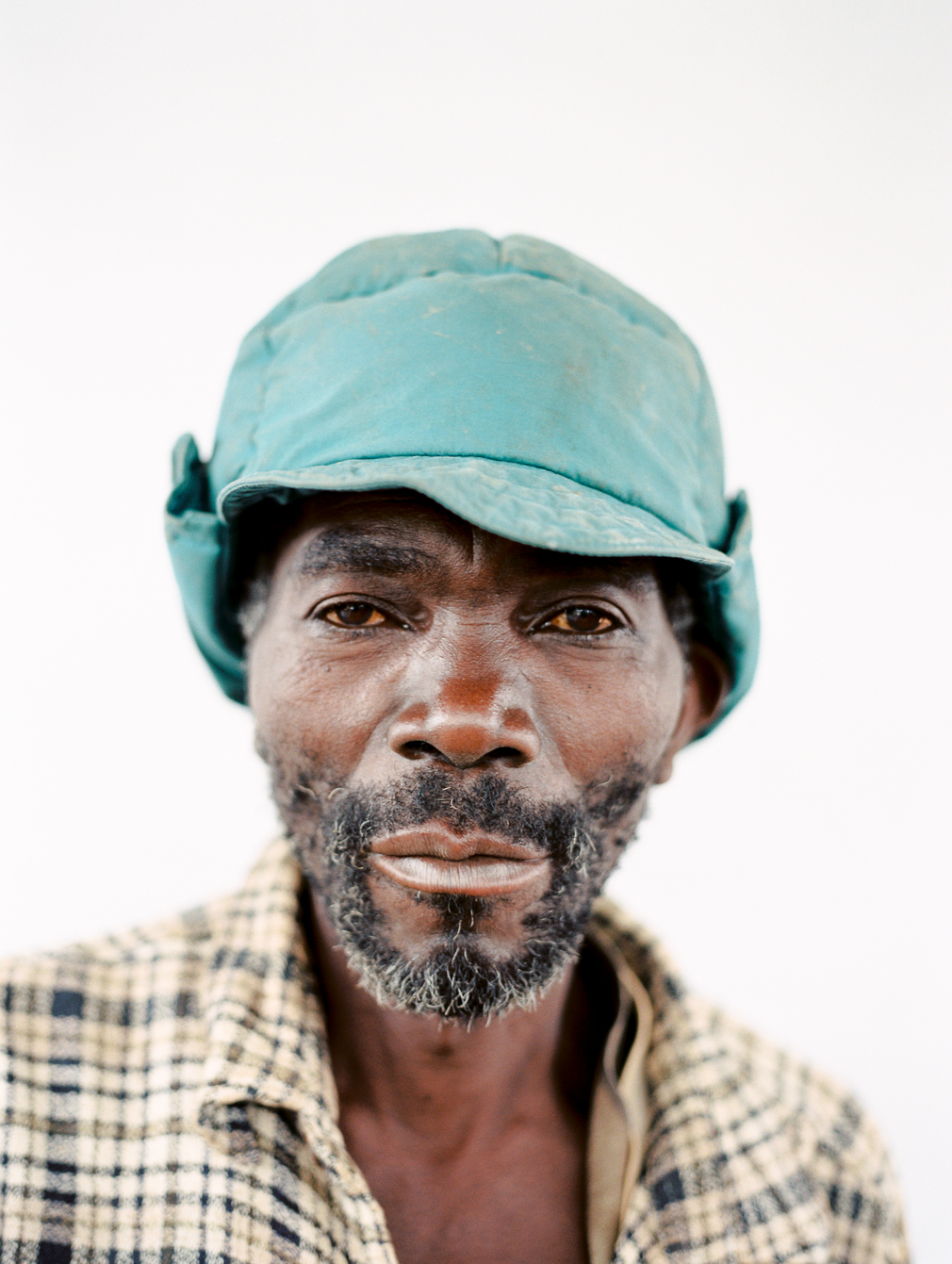
Like in any culture, there are no absolutes that apply to everyone. There are many Burundians who do drink coffee, but generally they are not the farmers who grow it. Whenever we ask coffee farmers if they’ve tasted their own coffee, the response is the same almost every time:
“NO, BUT I WOULD LIKE TO.”
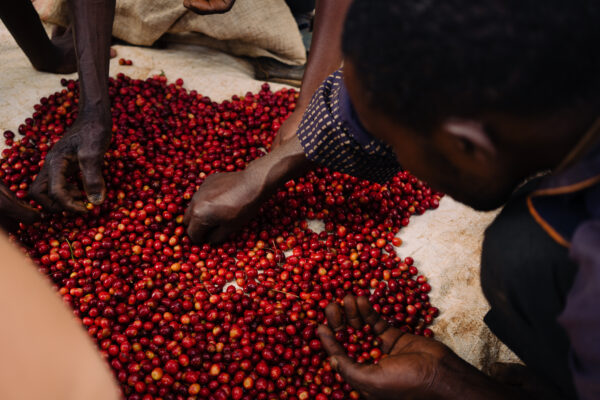
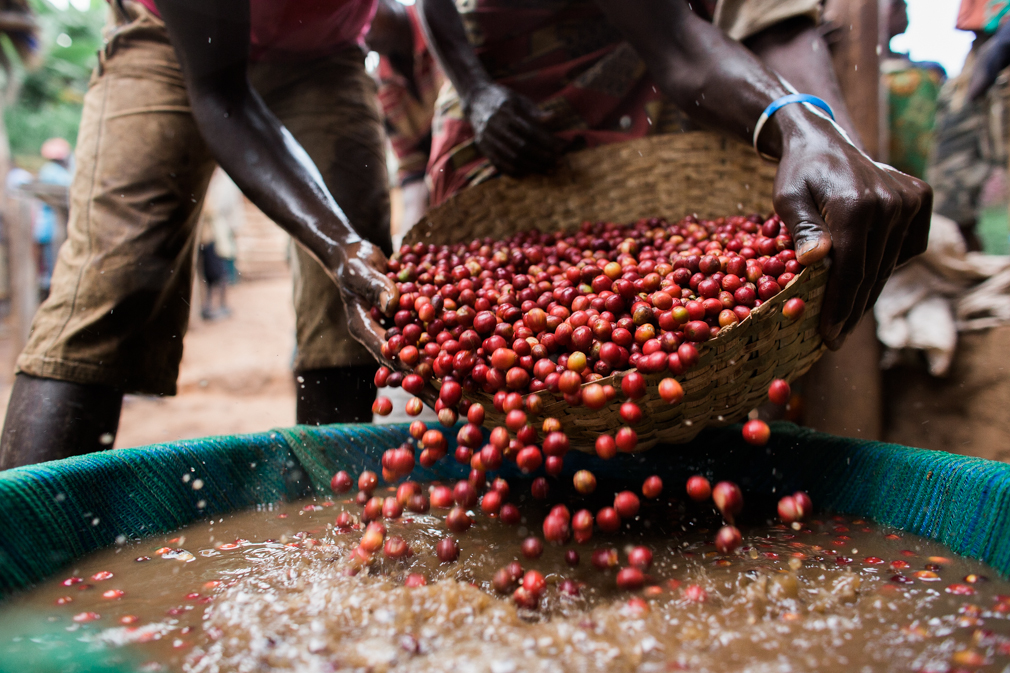
Coffee trees grow almost everywhere in Burundi’s higher elevation ranges, but coffee beans are hard to find outside of niche markets in the capitol city. The coffee cherries are too valuable for most farmers to keep and dry for home consumption, so the coffee crop goes to a washing station where it can make cash on the kilogram. It’s a common daily ritual for farmers to drink a glass of fresh milk or a thermos of hot tea, but almost never coffee. This might be because when Burundi was a Belgian colony, Burundians were forced to grow at least 50 coffee trees but never had the opportunity to drink it.
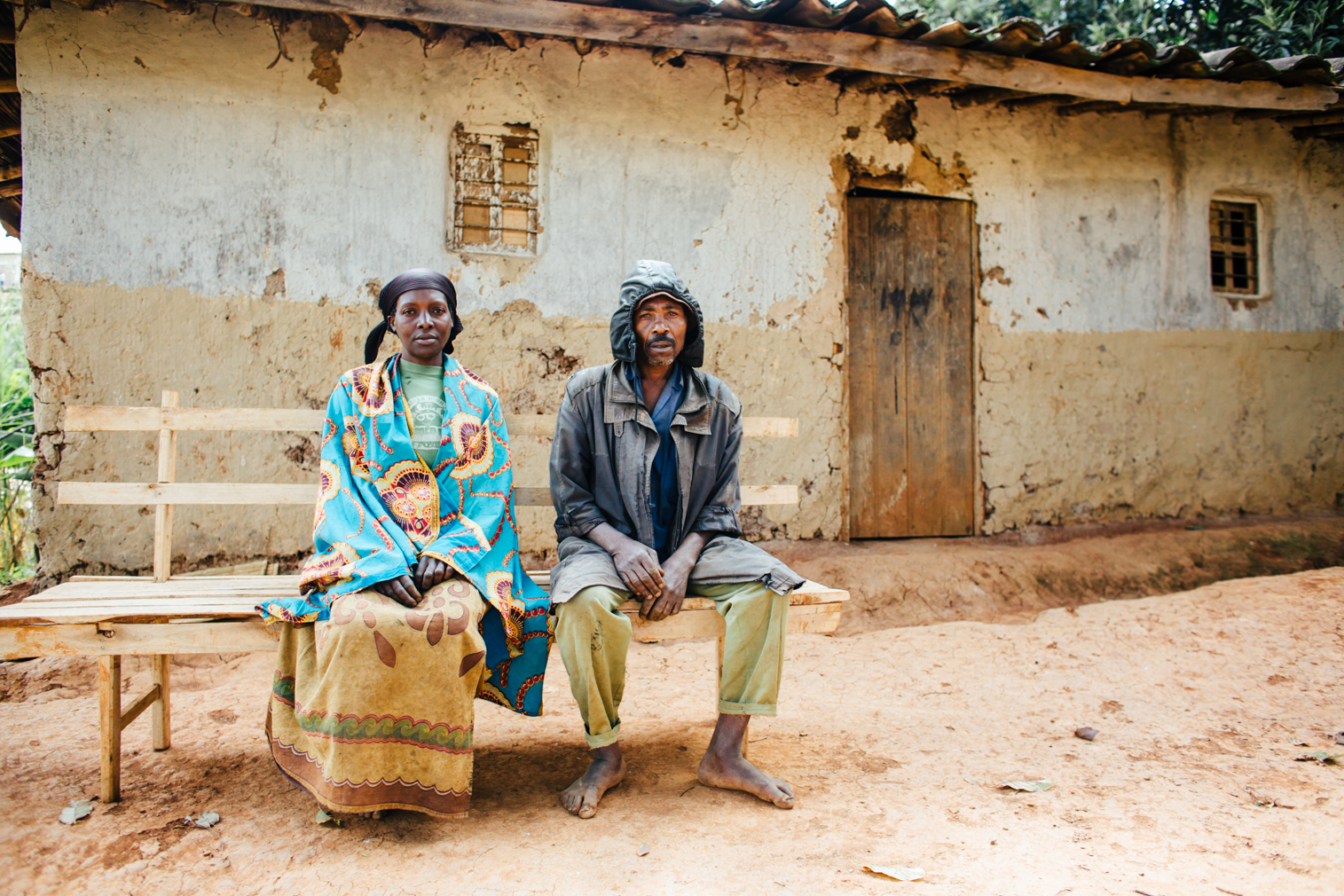
Coffee arrived in Burundi with the Belgians in the 192o’s. Growing coffee wasn’t a choice for Burundians from 1933 until Belgian rule fell away in 1962. When it did, many farmers ripped out their coffee trees, choosing instead to plant subsistence crops like bananas or cassava. Those who kept their coffee trees did so with little enthusiasm for coffee itself, having seen very little compensation for their efforts under Belgian rule. War, political uprising, a monarchy, democracy, and global warming have followed in the decades since. It has only been since the early 2000’s that producing specialty coffee has become a focus in Burundi. With such a turbulent past, it’s no wonder that farmers have had little opportunity to taste their own coffee. We wanted to change that for a farming couple named Philippe and Sabine.
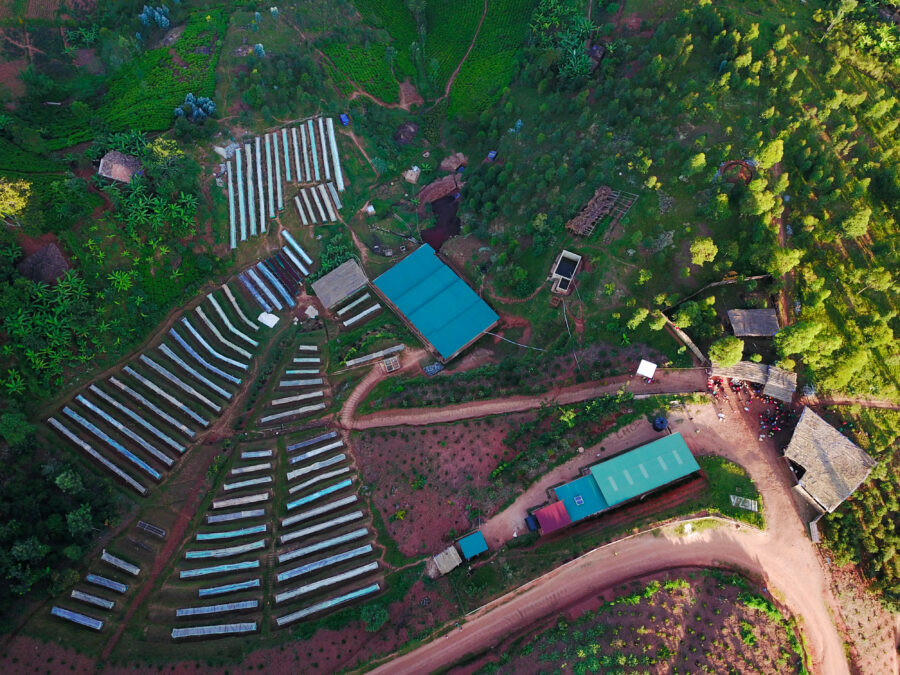
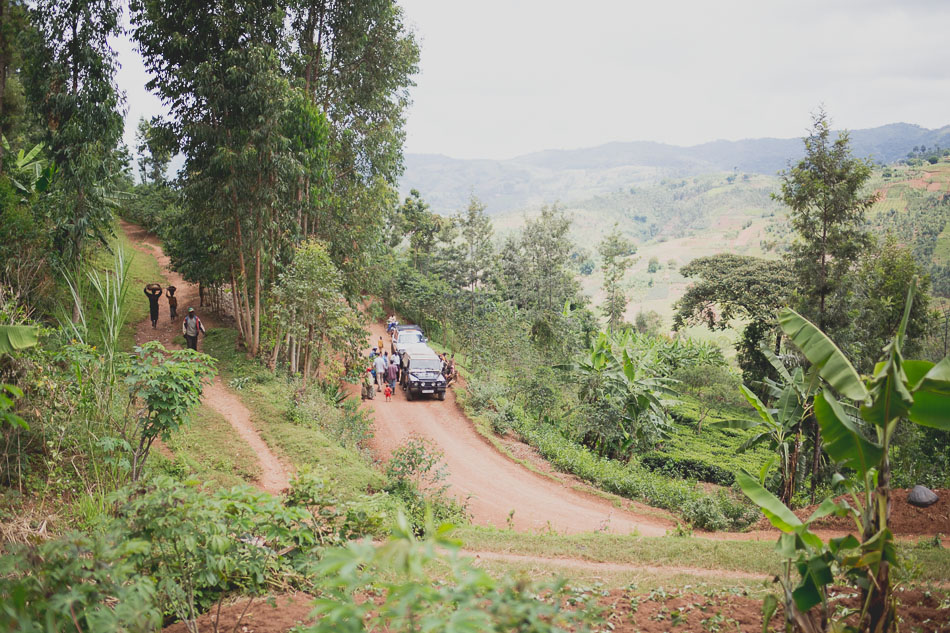
Philippe and Sabine live on a piece of land tucked underneath Gitwe hill, a stone’s throw away from Heza. They grow just shy of 500 coffee trees in between a sea of tea plants and banana trees on a piece of land inherited from Philippe’s father- a coffee farmer before them.
Have you ever tasted your coffee?
“Never.”
What do you think it tastes like?
“It must be nice, otherwise you wouldn’t ask us to keep growing it.”
How do you feel about learning how to make coffee today?
“Excited. When we have cherries again, we’ll be able to make it ourselves at home.”
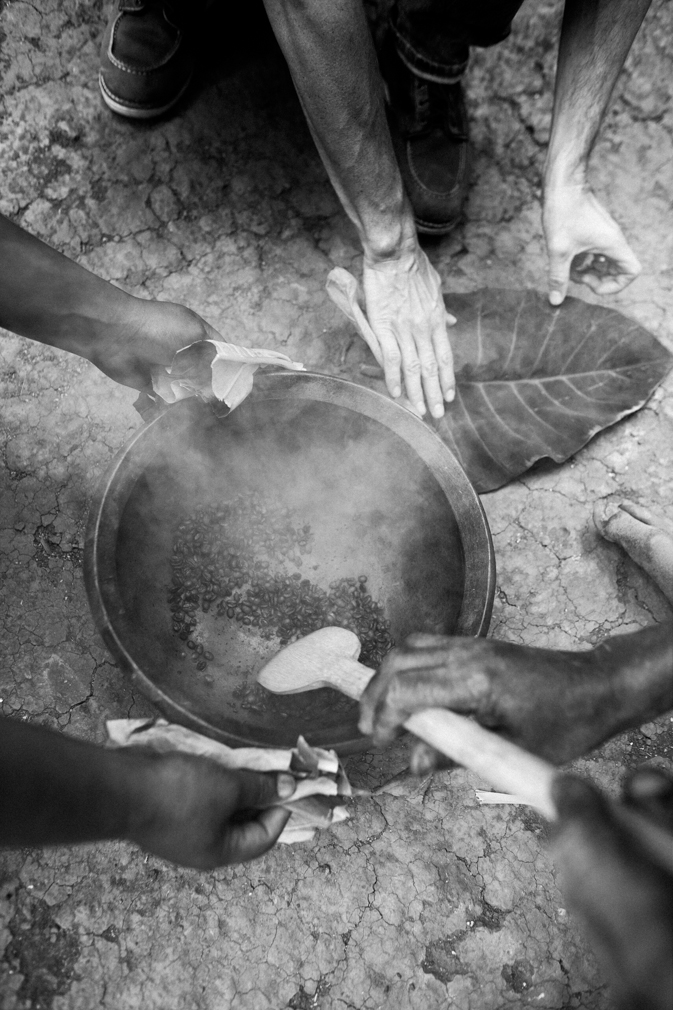
A wood-fire takes less time than coal to heat up a traditional Batwa pot
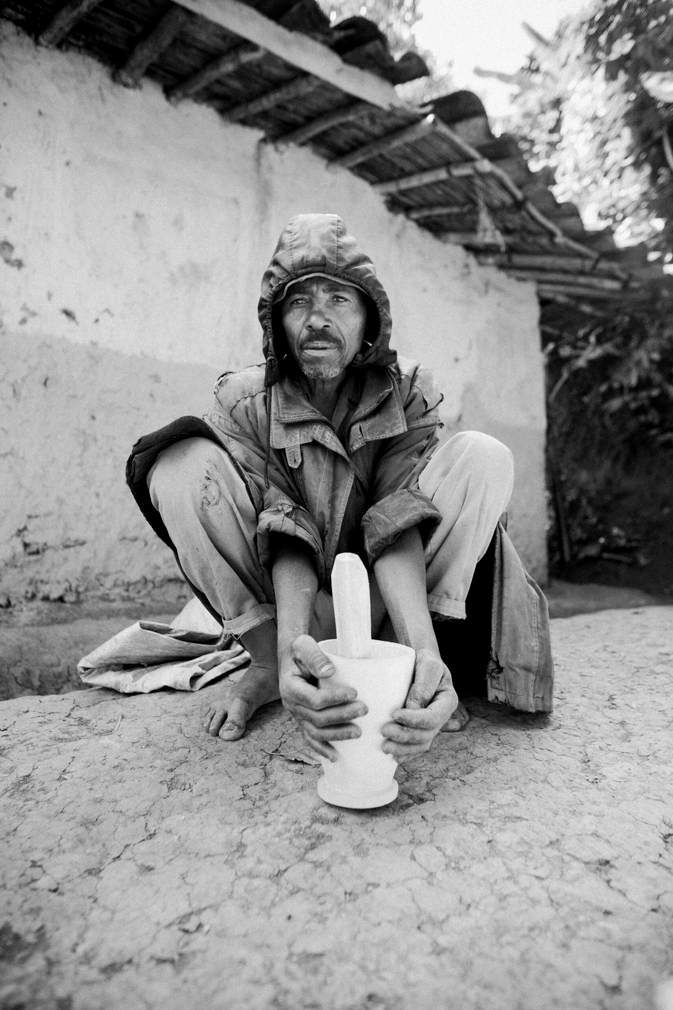
It was hard work brewing coffee with Philippe and Sabine in the hills where it’s grown. There are coffee farmers the world over who spend their days caring for this precious crop they might never get the chance to taste. It makes one realise that it’s a privilege to be able to buy, brew and drink coffee so easily in other parts of the world every day.
Our roasting partners world-wide are beginning to put our coffee on their menus and we would LOVE for you to check them out! Here are some of the places you can find Long Miles Coffees (there are certainly more). If we missed your roastery and you want to be added to this list, please send an email over to info@longmilescoffee.com.
Heading into the 2019 harvest, the mantra amongst our team was a seemingly simple one: get our first container of coffee out of the country by the end of August. By doing this we would be setting a veritable export record in Burundi; we would also make a Long Miles best. While we did not hit our goal, we did load our first container of coffee, destined for the West Coast of the United States, on September 9th. This was the earliest we have ever loaded a container and we were thrilled.
As the ever humbling gods of global logistics would have it, our container was not destined to move with the alacrity with which we would have hoped – or, even, could reasonably expect. In fact, our first USA-bound container landed in the States just two weeks before the second, which was loaded in Burundi on November 7th – nearly two full months after the first box was loaded. An unexpected transshipment in a congested Mombasa port caused delays in berthing the vessel. This, combined with the small print which renders our pleas for action completely inaudible to the shipping line, pushed the transit times to extremes – even for a landlocked East African nation.
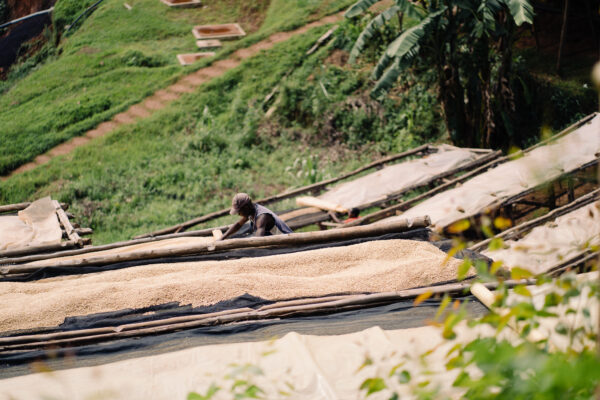
Fortunately, there was another mantra for some key members of the team during this past harvest: dry the coffees perfectly. As many reading will know quite well, the proper drying of coffee is critical in determining a coffees’ longevity. Our team in Burundi, lead by the intrepid Seth Nduwayo, was fierce in their dedication of sticking to strict parameters surrounding water activity. Water activity for each lot had to be below 0.55 aw before the coffee could be moved to the mill. For a number of lots, this meant going through the extra step of putting coffee that was in our washing station warehouse back on the drying tables in order to reach the target water activity level. Though tedious at the time of processing, this level of rigor paid off. An extended journey at sea can be a death march for coffee. This is all the more true for coffees whose moisture and water activity levels are above a certain point. Every single lot from the 2019 harvest produced at Heza and Bukeye arrived in North America in excellent physical condition and tasting wonderful.
Pamphile Mpawenayo, manager of Heza and Seth Nduwayo, quality and production manager.
“DESPITE THE DELAY, THE GAHARO IS SHINING AGAIN THIS YEAR, DARE I SAY EVEN BETTER THAN LAST YEAR! I’M ONCE AGAIN IMPRESSED WITH THE QUALITY THAT LONG MILES IS DELIVERING, WHILE DOING SOME REALLY IMPORTANT GRASSROOTS WORK ON THE GROUND IN BURUNDI.”
Though not on the timeline we had hoped for, there is still much cause for celebration when it comes to the timing of this year’s arrivals. Many thanks to our US importing partner, Osito, we were able to land the entirety of our North American-bound coffee earlier than any prior harvest.
“THIS YEAR’S LOT OF LONG MILES COFFEE ARRIVED ON SCHEDULE AND IN EXCELLENT CONDITION. THE GREEN COFFEE IS DENSE WITH EXCELLENT PREPARATION, PERFECT FOR EASY ROASTING. WE ARE PLEASED WITH THE LUSH FLORAL QUALITY OF OUR MICRO LOT. CLEAR, CLEAN FLAVORS OF BROWN SUGAR, ORANGE, AND TEA. WE FIND THE COFFEES HAVE A VIBRANT CITRIC AND TARTARIC ACIDITY WITH A DENSE SILKY BODY.”
It is important to acknowledge that our European-bound coffees did not move with the same speed that we were able to achieve in the States this year. While the coffee is scheduled to arrive at roughly the same time it has in previous years (the Germany-bound container has a current ETA of March 1st), we very much look forward to improving upon the timing of our coffees into Europe for the next harvest and beyond. The aforementioned mantras of the 2019 harvest will remain the same for our 2020 harvest. We are better suited to do this than ever before, thanks to our importing partners in the States and a newly formed relationship in Europe.
As long-time roasting partners and new relationships alike introduce their 2019 harvest Long Miles lots to their menus, we will make an effort to shine a spotlight on where you can find our coffees. Feel free to reach out to info@longmilescoffee.com if you are interested in finding a roaster in your area who has Long Miles coffee. Keep your eyes on our social media and this blog, where we will be posting further updates about where our coffee can be found.
It comes in a message from Anicet, one of our coffee scouts at the end of last year.
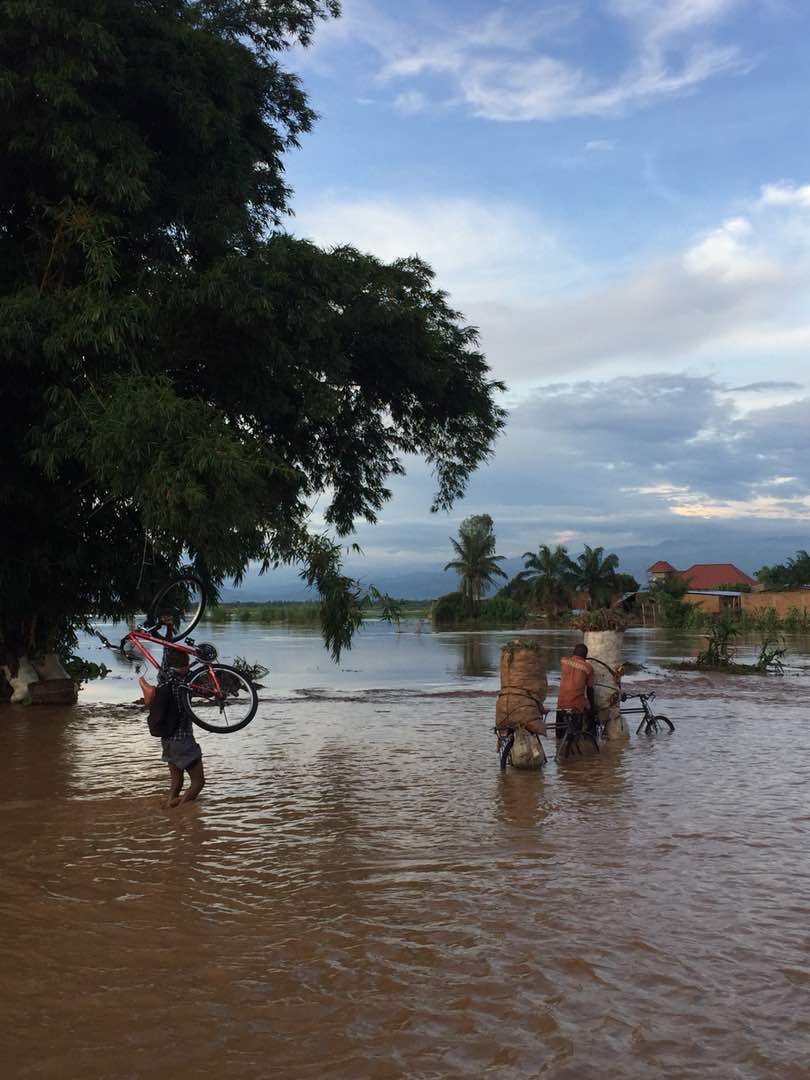
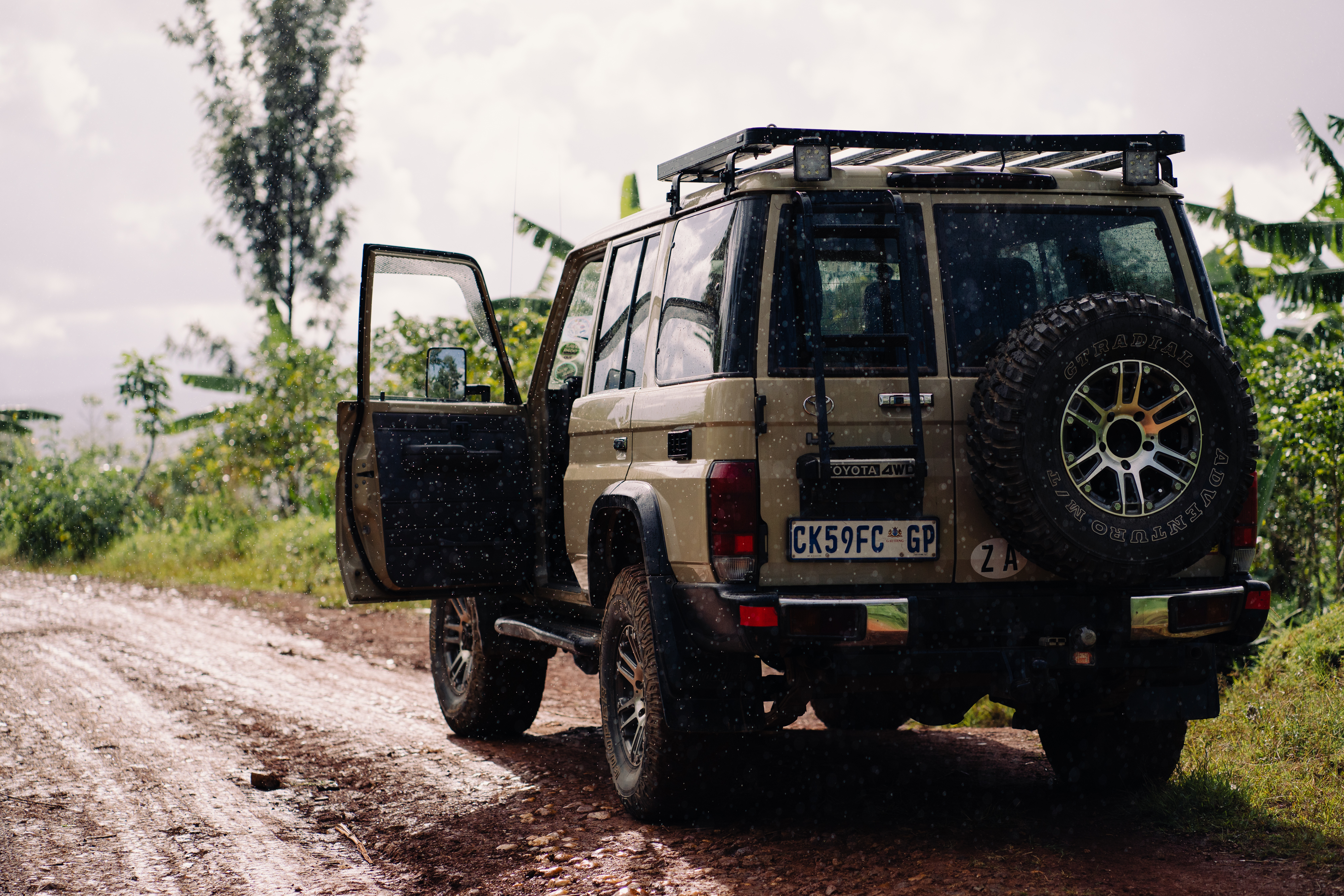
The heavy rains have caused soil to spill down the steep slope our Heza washing station is built on, stopping just short of the cherry reception tanks. Part of the road leading to Heza has crumbled away, making it impossible for anything or anyone to pass. We have to make our way on back roads to reach Heza now, adding an extra hour onto our already two-and-a-half-hour journey.
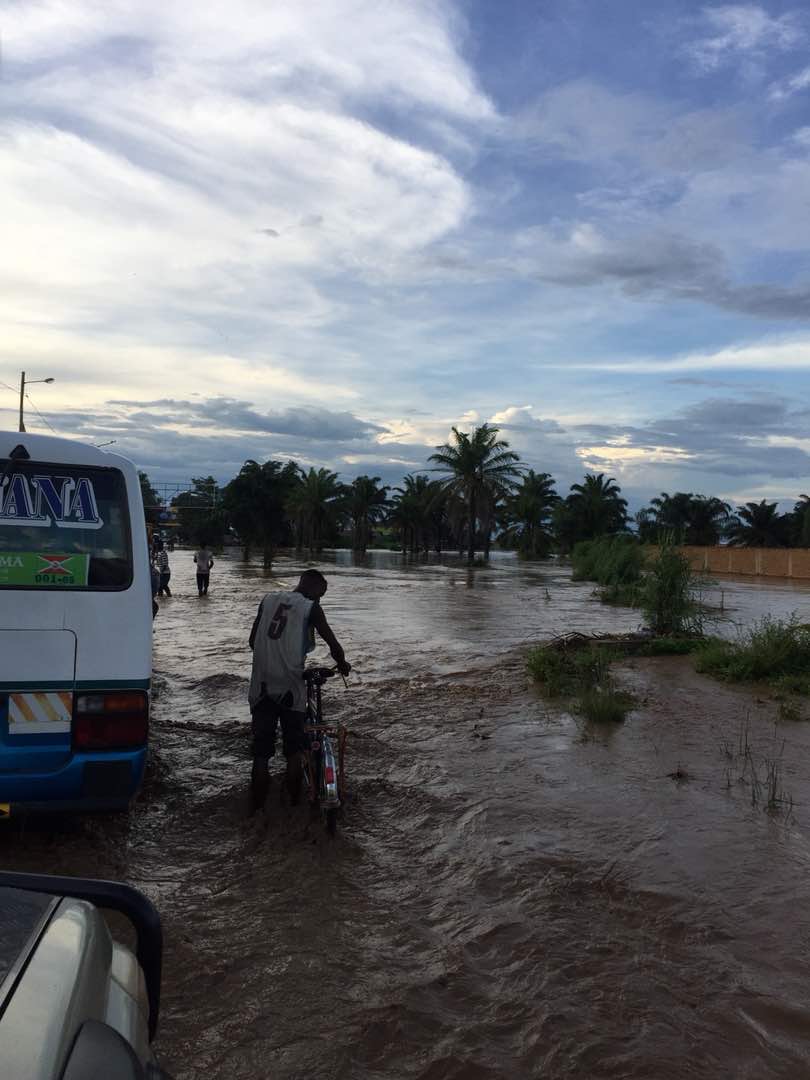
The rain started coming down in October and the ground hasn’t been dry since. It’s not unusual to have rain this time of year, but it is unusual to have so much. The reality is, Burundi doesn’t have the kind of infrastructure to handle all this rain. There are no real gutters here. No retaining walls or storm drains. Entire roads wash away, becoming one big deadly beast that makes its way through neighborhoods. This devastation spills over into farmers’ fields, uprooting crops. It breaks down homes, church buildings, erodes roads and sometimes claims lives.
“YOU CAN’T GO 500M WITHOUT SEEING THE DAMAGE FROM THE RAIN. IT’S TOUCHING EVERYTHING, NOT JUST THE COFFEE.” – Merchicedeck, coffee farmer on Gikungere hill
We’ve heard heartbreaking stories of friends waking up in the middle of the night, their belongings floating all around them. Families have spent days sweeping and scooping rainwater out of their homes by the bucketful. Raging knee-deep rivers have cut off entire neighbourhoods from one another.
Last week we took to the coffee hills to see how our farming community was feeling about all the rain. On the way up, the one national road was blocked by piles of mud that had spilled down from the surrounding mountains, making it impossible for cars to pass. Trucks that usually haul goods and fuel across Bujumbura (Burundi’s economic capital) were stopped dead in their tracks. Lines of cars snaked both up and down the road, waiting for the mud to be cleared by hand. We counted two broken pipelines spilling precious water across the road with no one to fix them in sight.
“THE BEGINNING OF COFFEE HARVEST IS SUPPOSED TO BE A HAPPY TIME FOR US, BUT THE RAIN IS BECOMING OUR ENEMY.” – Pascal, coffee farmer from Munyinya hill
This is not just a challenge for Burundi. It’s a hard truth to swallow for South Sudan, Central African Republic, Uganda, DR Congo, Sudan, Djibouti, Ethiopia, Somalia, Kenya and Tanzania.
“MY FAMILY’S LIFE STANDS ON COFFEE. WE WERE EXPECTING A LOT OF IT THIS YEAR, BUT DAY BY DAY I WATCH IT DISAPPEAR. THE RIPENING COFFEE CHERRIES AND LEAVES KEEP FALLING OFF THE TREES BECAUSE OF THE HEAVY RAIN.” – Abel, coffee farmer from Munyinya hill
Almost as quickly as the heavy rains came down, they slipped away again. We celebrate the dry days, our ears still prickling at the sound of rumbling thunder and dreading the pitter-patter of fresh rain.
Every harvest is difficult. I think if you asked farmers the world over, “What do you wish people knew about farming?” The answer would be, “That it’s BLANK hard.” Fill in the blank accordingly depending on the farmer’s location and what crop they are choosing to grow. A tomato farmer from France might say it’s fairlyhard but a wasabi grower from Japan would probably say that its damn hard. No matter the adjective, it’s tough. It just is.
Every time you hold a cup of coffee in your hands, you hold someone’s sweat and tears… and a whole lot of their anxiety. The same goes for everything we consume. Sure, there are the corner cutters out there who use pesticides and growth hormones to make production easier, but true farming and producing takes more grit than I ever knew it did.
I have a reverent fear of harvest. At the beginning of each one I wonder just how broken we will be by the end. Who will collapse first and what will be the thing that brings us to our knees? I realize that paints a dramatic picture. As much as I crave leaning away from drama, we’ve done nothing but embody it and become absorbed by it since we started producing coffee. Here’s our story…
2013 THE BEGINNING
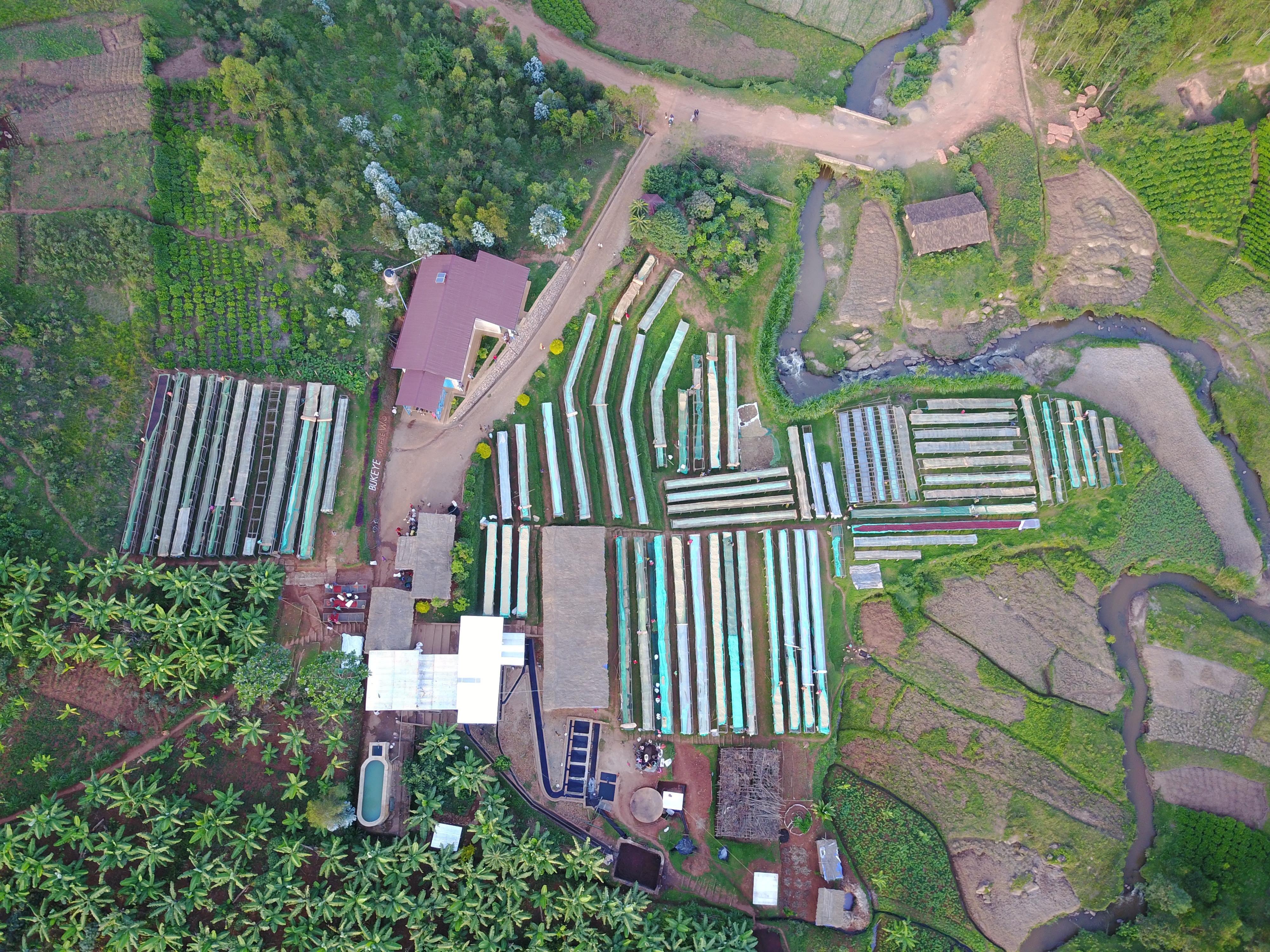
The Bukeye Washing station site, 2013.Bukeye Washing Station, present day during harvest 2017. Photo by Alexander Hansen.
Our first ever harvest was in 2013. In January of that year we had a crazy idea to build a washing station. We wrote a blog post and 48 hours later we had several donors who were willing to help us start. We couldn’t believe it. Harvest was just eight weeks away and we were walking the bare land of what would be the washing station. We were in a race against time. Building began in a fury and even now, traces of that fury remain. Stairs of every width and depth grace the station as if someone laid the cement with a tiger perched on their backs.
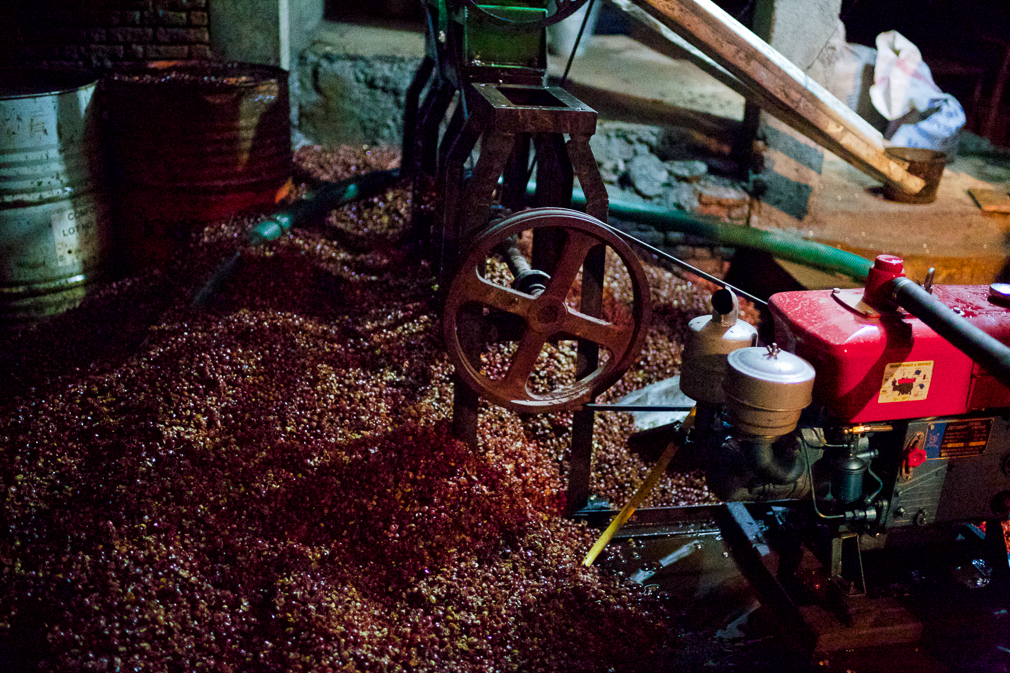
The community didn’t know us and we wondered if they would trust us with their coffee. As it turned out, most of them decided not to. Our shiny new depulper, the one machine needed to produce washed coffee, got stuck in customs. We bought two old hand crank depulpers and processed everything through them in our first season. Wet cement dried right alongside the coffee that year as the Bukeye station was still under construction as the coffee trickled in.
Our first eighty bags of coffee were produced on this tiny hand crank depulper.
When harvest came to an end, The McKinnon finally cleared customs. We produced a measly eighty bags of coffee that year, just a quarter of one container. We didn’t export our harvest until seven months after it was produced because we had to figure out how to get the twenty seven stamps and signatures needed to export coffee out of Burundi. Needless to say, our coffee that year didn’t taste very good. We begged roasters to stick with us, but in the end many of the roasters rejected their lots upon their arrival in the States. The quality was just not good enough and we were forced to sell parts of the harvest however we could to whomever we could.
2014 THE HEART
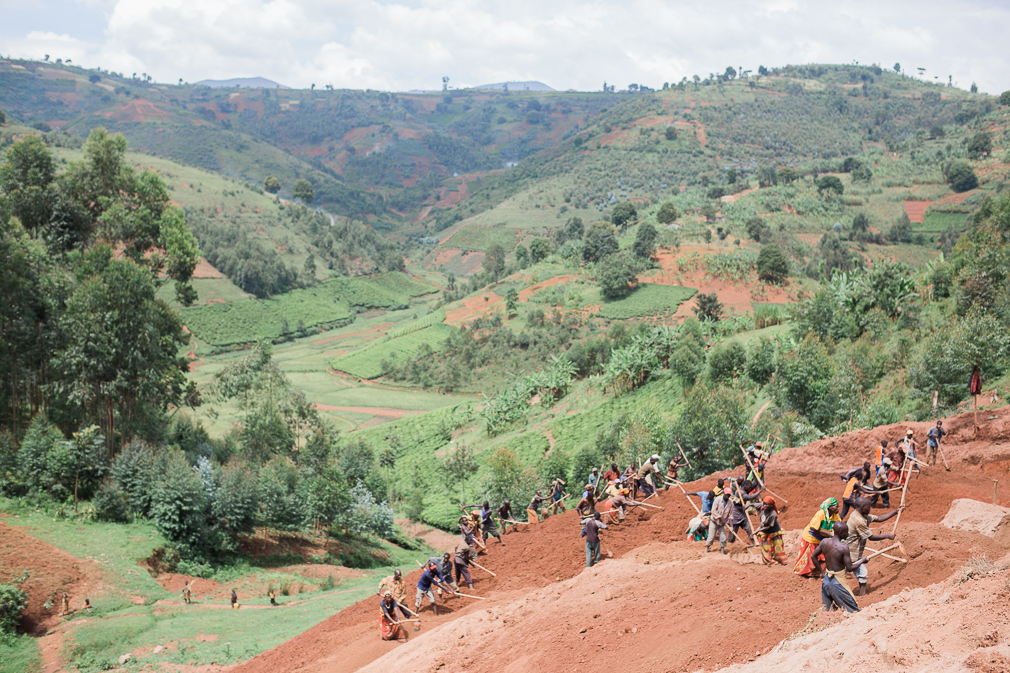
Every inch of land was cleared by coffee farmers at both Bukeye and Heza. Heza under construction, 2014.Heza washing station during harvest 2017. Photo by Alexander Hansen.
We were sure we had finally pulled it all together. We would be prepared for this harvest. We took on an investor and that would allow us to break ground on a second washing station. This one would be bigger and better.
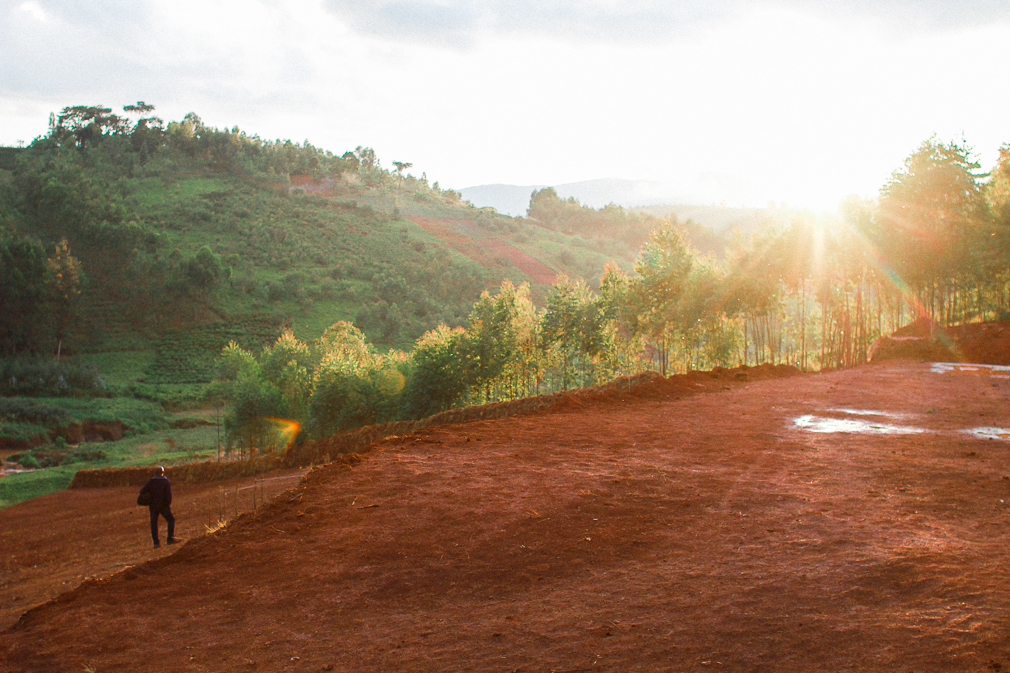
We found a piece of land in one of the most remote regions of Burundi that took our breathe away. We called it Heza, which means beautiful place in Kirundi. The mountains surrounding Heza were covered in coffee trees up to 2250 meters above sea level.
We hustled to get everything in place for harvest but again, we fell short. This time, we were overwhelmed by problems we had not foreseen. Heza did not have enough water. Without water, there would be no coffee production.
With harvest looming just days away, we drove up to Heza with high hopes of coaxing a water solution out of the day. Just as the half-built Heza came into view, our car came to a thumping and unintentional stop. We had brought invested visitors with us and we were excited to show Heza to them. When we asked one of them what he thought of Heza he said, “It’s a great Taj-Mahal white elephant.” The words stung because they were coated in truth. We were out of money and out of time, and standing by our broken down car in the middle of the remote Burundian countryside we felt trapped by our own makings.
When we finally got home that day, I painted a great big sign with the words, “We do not lose heart” in blue cursive letters. I taped it to our living room wall right over the couch and it stayed there until well after harvest was over. Every time I looked at that sign I could breathe a little deeper and believe a little harder.
As harvest came, our station sat silent. There was no whir of a generator or clacking of a McKinnon. There was no water. No matter how well built the new rinse tanks and tables were, we could not produce coffee.
Our car, broken down near the Heza build site.
We decided that we would collect a harvest anyway. We had told the community we would begin, and we felt we needed to try. We trucked coffee cherries every night from Heza over switchback mountain roads to our Bukeye station forty-five minutes away. One night, a competing washing station blocked the roads and demanded that our team stand down. They carried on. In 2014 we produced nothing from unique hills on Heza. All the trucked lots were combined into one hill that we simply called “Heza.” It was all we could muster and it brought our Bukeye station to the very brink of its capacity. To our surprise, those who drank it appreciated it. Maybe there was hope that we could one day produce a great cup of coffee?
2015 THE TROUBLE
Having fun at Bukeye WS while “waiting out” the trouble.
It began with protests and tear gas and escalated until bullets and grenades rang through the air every day and night. There was no school for the kids. I baked cookies in the kitchen with them most mornings, the radio blaring to drown out the sound of gunfire. We kept a “go bag” near the door with our passports and money inside. We stood ready to flee but our feet felt like led.
As harvest reached it’s fullest middle, a coup d’etat graced the capitol city where we lived. Overnight, our world changed. Most Burundians and ex-pats with the means to do so left the country. Over 250,000 refugees were reported. We retreated upcountry to the safety of the farmland and coffee harvest but even there, cracks in Burundi’s thin shell of peace were appearing.
Ariana joins our family as harvest 2015 comes to a close.
Our boys had been out of school for nearly a month and in that month we trespassed upon the hospitality of nearly everyone we knew who lived in a more remote region. When we were in the city, we trolled daily social media reports to assess the security situation before we went out the door. I was pregnant with our third baby at the time and whenever I left the house I questioned it… Can we make it to school today? Can I get to the market without getting caught in crossfire?
It became evident that life in Burundi was no longer sustainable for our family. With harvest still ongoing, we made the decision to leave. We didn’t know how long our exit would be for and we were leaving a team of people behind us to carry on in the chaos. It felt wrong, but we’ve always said that the safety and health of our family has to be a priority and so, during mid harvest, we made it one.
Ben continued to fly in and out of Burundi while the boys and I, and a growing baby girl, stayed firmly in South Africa. We began to build a new life, but how long would it be for? In the end, our 2015 harvest was better than any before it and the growing demand for Burundi coffee left us feeling hopeful about the future, if only peace would return.
2016 THE RATTLE
Weighing in.
The dust had barely settled from a large scale military base attack in the city of Bujumbura when we touched back down in Burundi. Making the decision to return with our growing family had been riddled with uncertainty. It looked like the same old Burundi, but nearly everything and everyone had changed. People were being taken and there was no finding them. Forces were searching the homes of whomever they wished and they did not come in peace. There were whispers of mass graves. Everywhere there was fear. Was this the start of war?
I often traveled upcountry and left our five month old in the city, but I struggled to stay calm. What if I couldn’t get back to my kids? What if the roads were closed? What if they decided to search our home while I was gone? I dropped the boys off at school with trepidation. Was it a good idea for them to be a fifteen minute drive away? I asked the school what they would do in case of an attack. I began to feel lost in the sea of sad stories that surrounded me. Stories of torture, disappearances and injustice were everywhere.
The junior LMCP squad, 2015.
Harvest began. All went well until we had more coffee than some thought was necessary. Our oldest son was with us one evening when we were surrounded by a dozen armed men and told that we had to stop the farmers from delivering their coffee to us. “This coffee,” the leader told us while waving his gun in the the direction of the coffee trees, “no longer belongs to you. Tell your farmers to take their coffee elsewhere.” Fear carried us and all we could think about was the damage these men could do to our team or our family.
After the men left, our agronomist Jeremie said, “Yeah, I’ll just go talk to them on Monday. It will be ok.” We believed him and as harvest carried on, we kept our doors open to any farmer willing to deliver their coffee to us. Our team’s continuous bravery during the entire season was an inspiration to us.
2017 THE DRAIN
Farmers and employees carrying water to the station during the height of the 2017 water shortage. Image Alexander Hansen.
Ben calls our current harvest the hardest one yet. I’m not sure what to call it, but the image of my husband in tears at our kitchen table will be with me forever. This was the harvest that frayed us to our very last emotional thread.
Our biggest challenge was navigating a country-wide fuel shortage. Power and water are the most basic needs of coffee production. In order to produce coffee in remote regions, fuel is necessary to power the generator that in turn powers the coffee depulper that is the key to washed coffee. We also needed fuel to get people and other resources up and down the mountain.
Our Operations Manager was glued to her phone, hoping that one of her contacts would tell her where there might be fuel. If a text came, she would race with fuel canisters in tow to the fuel station. Often, she would wait for hours in a line only to get to the front and be turned away because there was none left. Our lives became all about fuel until the fumes of it stuck to our hair and drenched the interior of our cars.
When our attention wasn’t on the fuel crisis, it was on our water crisis. Heza, after three years and many attempts, still did not have a working well. Our water supply was critically low. We have tried to solve the water issue at Heza in so many ways that I have lost count of the attempts. On several occasions we declared that, “The well is finally working!” only to discover hours later that the pipes had given way.
Farmers have to walk or bike their coffee to us after 2017 regulations outlaw collection points overnight.
This season we also faced a constant stream of changing laws. Right before harvest commenced, collection points were outlawed. We could no longer go to the farmers to collect coffee, they had to bring it to us. In past years collection points had been a way to save farmers valuable time and energy and improve our coffee’s quality. This season it became commonplace to meet farmers on the road who were carrying their coffee to us from ten to fifteen kilometers away.
One evening Ben asked a farmer named Jean why he brought us his coffee when his farm was fifteen kilometers away. Ben was especially curious because Jean had passed two other washing stations on his way to us. Jean said that for twenty years the others stations had been taking a portion of his harvest for themselves.
Ben and Jean calculated together that unjust scales and the people behind them had taken six point six pounds of every twenty pounds of his coffee cherries, and they had been doing it for twenty years. Jean pointed to our coffee farms which cover the mountain above our washing station and said, “Your scales are fair and I see that you are also farmers. We are in this together. Twese hamwe.”
Stories like Jean’s kept us going through a season like no other. But that’s just it… every season is like no other. The winds of challenge and change always blow in a choice assortment of new circumstances every year. And that, my friends, is why my heart races when I think of harvest. Next time you hold a cup of coffee, know that you also hold a story and probably a whole lot of struggle.
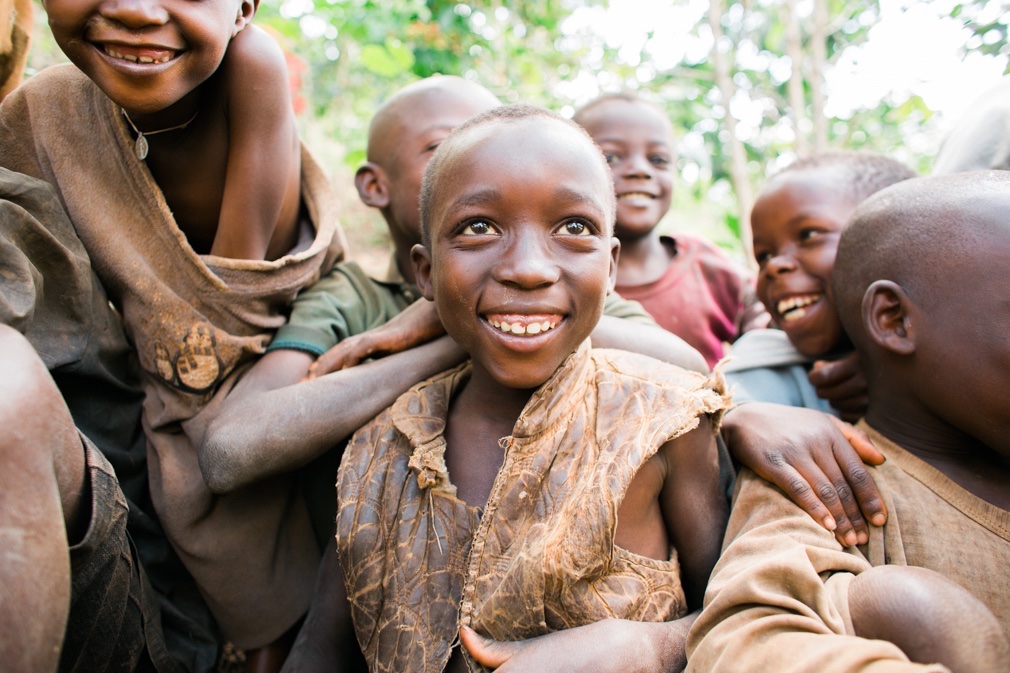
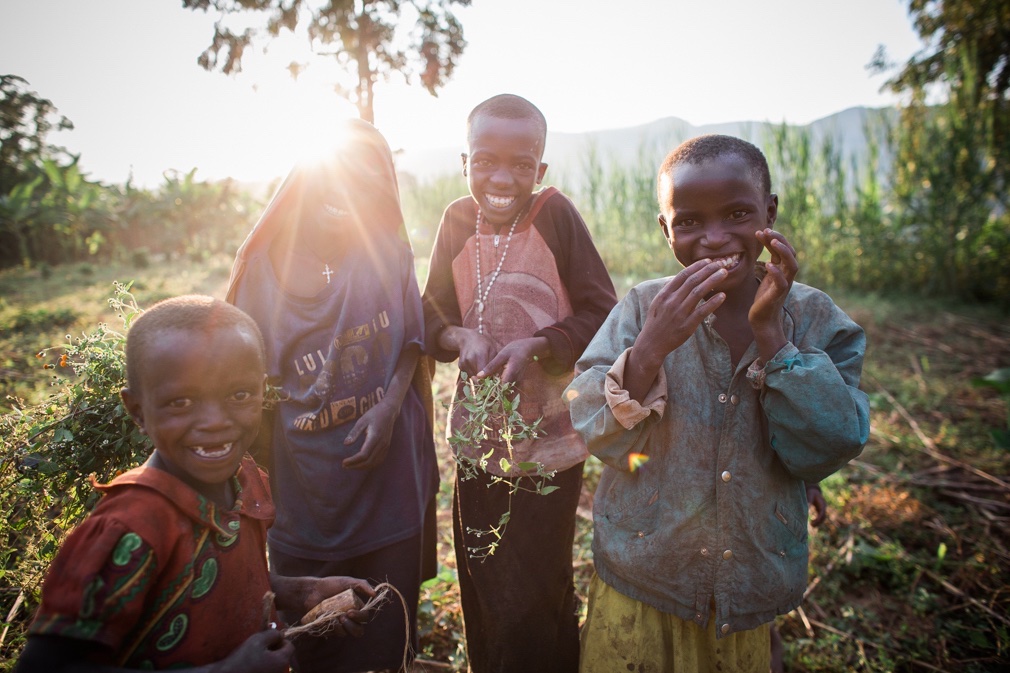
This week our annual Coffee Summer Camp came to an end. Our agronomist, Ephapras, was the visionary behind the camp. When he realized that children were not motivated to learn about coffee, he decided to come up with an innovative way to spark their interest. Back in 2015, he came up with the idea of running a coffee summer camp that could take place during school holidays. Since then, together with the help of our Coffee Scouts, he has been able to motivate hundreds of children to learn about coffee and recognize its value.
The theme for this year’s camp was “Ikawa wacu, kazoza kacu” which means “Our coffee, our future”. One of the major camp activities this year included the Scouts teaching about the Antestia bug and its link to the potato defect. To end off the camp, they took part in a month long Antestia-catching competition. Their response to the competition was incredible and by the end of it they had captured 248 046 bugs!
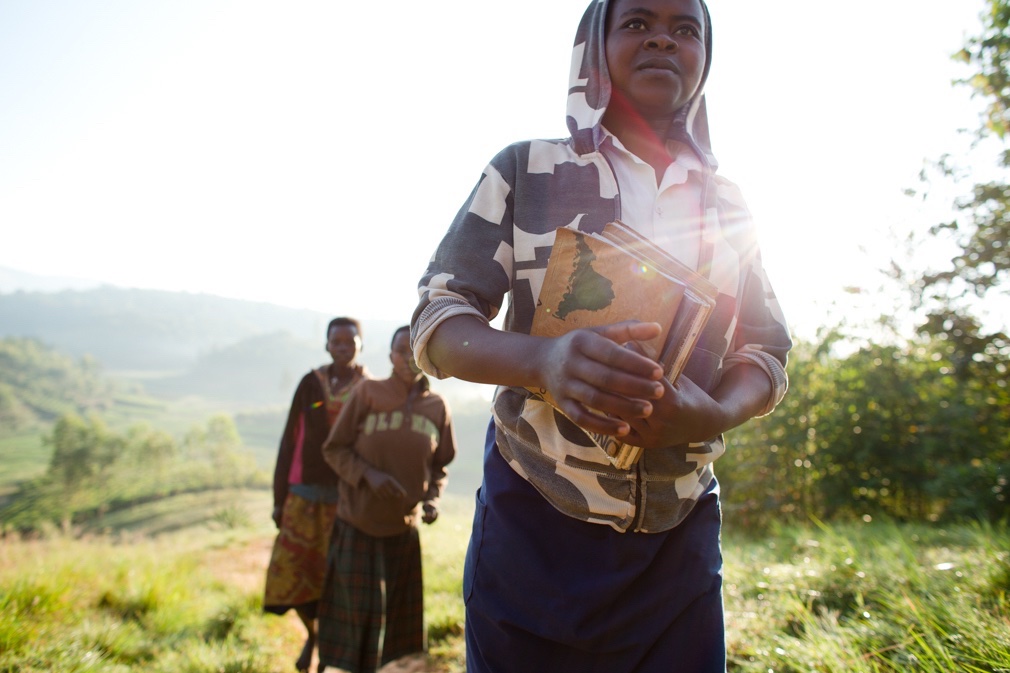
The camp ended just before the new school year began, so the prizes awarded to our Antestia-fighters included school uniforms, notebooks and stationery sets to encourage them with their future at school. Parents in the community were overjoyed that their children took part in the summer camp, because not only did it keep them occupied during the school holidays but it also empowered them with skills and opportunities. Leaders in the community were also proud that so many children have now taken a new interest in coffee.
We’ve haven’t had 790 children participate in a camp like this before, never mind catch 248 046 bugs. We’re curious to know if this impacts the ecosystem in any way. If anyone has any information on this, we would love to hear about it!
We couldn’t be prouder of all the children who participated in this year’s camp. We are also incredibly grateful to our team who are working extra hard to engage with and empower farmers. If this summer camp has taught us anything, it’s that there is great hope for the future of coffee in Burundi.
Life’s best moments often seem to be tucked deep inside the ordinary ho-hum minutes of our days. On Tuesday, the boys and I gave our turtle Popcorn a bath. His name alone makes me smile- one day Ben went out looking for some popcorn (which he couldn’t find anywhere in town) and came back with a turtle. Popcorn’s bath was a simple thing- but to see that turtle’s joy at the vast amount of water before him kind of made my week. That’s strange, I know, but lately I’m realizing it’s all about the little things. Laughing with a friend in the gym, watching an epic rainy season storm roll in, taking a long walk on one of our coffee producing hills, giving myself permission to listen to Christmas music in October… and greeting farmers like Spes.
Spes is one of the first woman coffee farmers I connected with back in 2013 and I love seeing her every coffee season. Greeting her, finding out about how her five children are, talking to her about the future- there is something familial and joyous about seeing the same farmers harvest after harvest. Spes has a small number of trees, only 500, and she’s one of the farmers whose land we have been rejuvinating with new coffee trees.
With new trees comes great responsibility- farmers have to agree to being trained in mulching, fertilizing and pruning practices in order to recieve trees from our nursery. Before the nursery project began our farmers were averageing just 400 grams of coffee cherries per tree and now the average in the hills around our station is 1 kilogram. It’s training alone that has made that difference. We hope, one day, that our farmers will be gleaning 3 kilograms per tree. One day.
Ok, we do get pretty geeky about the coffee trees around here- but seeing transformation is really what this is all about for us.
Follow our #fridayfarmers hashtag on Instagram to see more!
“That someday they will have a life outside of poverty.”
It’s time for a woman’s voice to echo through this portrait series again. Elizabeth is one of the first farmers I remember meeting. She was carrying coffee cherries in a basket on her head into the washing station four years ago- one of our first farmers. She has given us gifts over the years of bananas and beans. It is hard to take Elizabeth’s gifts because we know that she is a widow with six children, but to refuse them would be the antithesis of living in community.
Elizabeth’s life is marked by the loss of her husband. She has had to become the sole provider for her six children since he was killed in the war. Unfortunately, in Burundi widows can loose their land to their husbands’ brother or other male family members after the death of their spouse. Here land is most family’s only lifeline. Thankfully Elizabeth has been able to retain ownership of her land on Gaharo hill and she’s still caring for her family’s 600 coffee trees.
Follow our #fridayfarmers hashtag on Instagram to see more!
Being taught by my father how to farm. It is what has sustained me.
Who is your role model in life?
My grandfather. When he left this earth he passed on something to his children. I hope I am able to do the same.
What do you hope for your children?
I hope that they have a good future in agriculture. None of them have had much education. I believe that development begins by picking up a hoe. Without working these fields, we will never move forward.
Have you ever tasted your coffee?
Yes, it’s delicious and sweet!
Charles has been farming coffee since the 1970’s and has 480 trees. Since our washing station opened four coffee seasons ago, he’s been walking from nearby Gaharo hill to deliver his coffee cherries to us.
Follow our #fridayfarmers hashtag on Instagram to see more!